

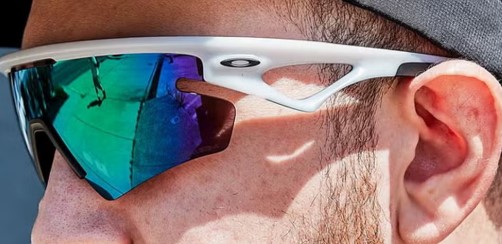
There is a particular kind of disappointment reserved for a snapped frame. It tends to happen at the worst possible moment: pulled from a bag by one arm, sat on absent-mindedly at a picnic, dropped lens-down onto unforgiving pavement. Sunglasses live hard lives. They are worn on beaches, on bikes, on building sites and in festival fields. Durability, then, is not a luxury. It is the quiet baseline requirement.
Among the brands repeatedly associated with sturdiness, Oakley comes up with near-monotony. Not because of clever slogans or seasonal colourways, but because its frames are built with a particular sort of pragmatism. Even those who have never paid much attention to eyewear design tend to recognise the slightly engineered feel of an Oakley frame in the hand.
Built with impact in mind
Oakley’s roots in performance sport shape much of its construction. Many frames are made from O Matter, a proprietary nylon-based material developed to be both lightweight and resistant to stress. It has a faint flexibility when pressure is applied, rather than the brittle rigidity that often leads to cracks. Hinges are typically integrated in a way that reduces weak points, and wraparound shapes distribute tension more evenly across the frame.
That attention to impact resistance is not aesthetic. In cycling, running and snow sports, eyewear must withstand speed, falls and sudden temperature changes. Lenses are tested for high-velocity impact, and frames are designed to stay put without constant adjustment. Even when worn casually, those same qualities translate into something reassuringly robust.
It is not unusual to see a well-worn pair that has survived years of being shoved into rucksacks and car glove compartments. The scuffs tell their own story, but the structure remains intact.
Durability beyond sport
What often surprises people is how well that resilience carries into everyday use. Commuters who wear sunglasses daily through British winters and unpredictable summers subject them to a cycle of condensation, rain and hurried handling. Frames expand and contract; screws loosen; coatings degrade. In that context, sturdiness becomes less about extreme sport and more about longevity.
For those who require vision correction, Oakley prescription sunglasses occupy a slightly different space. Adding prescription lenses can introduce new structural demands, particularly with higher prescriptions that require thicker lens edges. The frame must support the lens securely without distortion. Oakley’s sport-led design ethos tends to accommodate this without compromising stability, which partly explains their popularity among active wearers who need corrective lenses.
There is a useful overview of how the brand approaches prescription integration within its performance models here: https://www.shadestation.co.uk/oakley/oakley-prescription-sunglasses.html
Materials matter more than logos
Of course, sturdiness is not exclusive to one manufacturer. Ray-Ban, for instance, has long produced acetate frames that age well when properly cared for, while brands such as Maui Jim focus heavily on lens durability and corrosion resistance, particularly for coastal climates. The difference lies in emphasis. Some brands prioritise optical clarity, others heritage styling. Oakley’s reputation rests squarely on structural resilience.
The engineering-led aesthetic can divide opinion. Wraparound silhouettes and moulded nose pieces are not universally flattering, nor are they designed to be. Yet sturdiness is rarely elegant in the traditional sense. It is practical, sometimes slightly overbuilt, and often heavier in spirit than in weight.
The quiet value of something that lasts
There is also a broader consideration. In an era of rapid trend turnover, the most sustainable object is often the one that does not need replacing. A frame that survives five summers and countless minor accidents is less likely to end up in landfill after a single season. Durability becomes, indirectly, an environmental virtue.
This is perhaps why conversations about the “most sturdy brand of sunglasses” rarely conclude with a single definitive answer. Wear habits differ. Face shapes differ. So do expectations. Yet when the question centres on impact resistance, frame integrity and a certain utilitarian toughness, Oakley consistently sits near the top of the discussion.
Sturdiness, in the end, is felt more than advertised. It is the absence of worry when sunglasses are dropped onto gravel. It is the hinge that still moves smoothly after years of use. In that quiet reliability, certain brands earn their reputation not through spectacle, but through survival.
