


Have you ever noticed your energy for working out goes up and down throughout the month? One week you feel strong and ready to move, while the next, even getting to the gym feels tough. If this sounds like you, you’re not imagining it! These shifts are often tied to your menstrual cycle.
By learning to match your exercise routine with your cycle, you can make the most of your body’s natural changes. This is called cycle syncing. Instead of trying to fight through low-energy days, you can work with your body to feel better, perform stronger, and recover easier. If you’re interested in other supportive rituals, you might like exploring rituals to do on your period.
Though the science behind cycle syncing is still growing, many people say it helps them connect with their bodies and exercise more effectively.
The core idea is simple: every menstrual cycle is unique, and your workouts can change to fit your individual needs. This approach can help you avoid burnout and make fitness a positive part of every month.
What Is Cycle Syncing and How Does It Affect Exercise?
Cycle syncing just means adjusting your daily habits, like what you eat and how you exercise, to match the different stages of your menstrual cycle. This idea respects the fact that your hormones – which affect things like mood, energy, and cravings – aren’t the same every day.
Instead of forcing yourself to work out hard when your energy is low, you can plan your workouts during high-energy phases and give yourself rest when you need it.
Throughout the month, your hormone levels rise and fall. This affects how much energy you have and how quickly you recover from exercise. Once you understand your own cycle, you can change your workout choices to fit. This helps you feel better and makes your workouts more effective.
Why Sync Workouts with Your Menstrual Cycle?
- Improve performance: Plan harder workouts when your energy and strength are at their peak.
- Feel better: Schedule rest or lighter activities during lower-energy times to avoid fatigue and possible injury.
- Reduce symptoms: This approach can help ease cramps, mood swings, and other cycle-related symptoms by respecting your body’s ups and downs.
Who Can Benefit from Cycle-Synced Exercise?
If you have a menstrual cycle, cycle syncing may help you. It can be useful for athletes, those managing daily energy, or anyone wanting to know their body better. People with symptoms relating to their periods, like those with PCOS, endometriosis, PMS, or PMDD, may also find relief by matching movement to their cycle.
Even though not every benefit is backed by large studies, many people find that tracking their cycle helps them manage symptoms more easily.
How Does Birth Control Affect Cycle Syncing?
This is a common question. Hormonal birth control gives your body steady levels of hormones and prevents the natural ups and downs of your own cycle. Because of this, cycle syncing as described here may not apply in the same way. However, you might still notice changes in your body, like mood or energy, during each month.
Adjust your workouts based on how you feel, and you’ll still get many of the same benefits. It’s about being aware of your body, whatever your hormone situation is.
The Four Phases of the Menstrual Cycle
The menstrual cycle usually lasts around 28-35 days, but can vary. It’s much more than “just” your period. The cycle includes four different phases, each marked by specific changes in hormones, energy, and mood. If you want to try cycle syncing, understanding these phases is your starting point:
| Phase | When It Happens | What’s Happening | Best Exercise Type |
| Menstrual | Day 1-7 | Your period; estrogen & progesterone are at their lowest | Gentle movement, rest |
| Follicular | Day 8-13 | Estrogen rises; energy increases | Strength training, HIIT, new challenges |
| Ovulation | Day 14 (24-36 hrs) | Estrogen peaks; testosterone rises; highest energy | Personal bests, intense cardio or sports |
| Luteal | Day 15-28 | Progesterone rises; energy fades, PMS may appear | Moderate cardio, stretching, rest as needed |
Summary of Each Phase
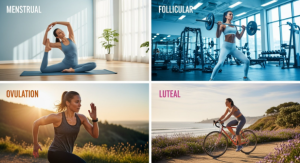
- Menstrual: Lower energy; good time for gentle yoga, stretching, easy walks, or rest.
- Follicular: Increasing energy; time to try new workouts, increase weights, or go for harder cardio.
- Ovulation: Peak energy and strength; best for tough training sessions or high-intensity classes.
- Luteal: Energy starts to slide; focus on steady, moderate movement, and rest more if needed.
Benefits of Matching Workouts to Your Cycle
- Better Energy and Performance: Scheduling intense exercises when you feel your strongest lets you work harder-and enjoy your workouts more.
- Less Fatigue and Lower Risk of Injury: Taking it easy during lower-energy times helps prevent burnout and injury.
- Better Mood and Motivation: Exercise can lift your spirits, especially if you adjust the intensity to fit your hormone cycle. High-energy workouts can boost your mood during energized days; gentle movement provides comfort when energy is low.
The Best Workouts for Each Cycle Phase
Let’s break down the kinds of workouts that fit best with each phase. Use these guidelines as a starting point, but always listen to your own body’s needs.
- Menstrual Phase (Days 1-7):
- Activities: Gentle yoga, stretching, walking, Pilates, or rest.
- Why: Your body is losing blood and hormone levels are low, so focus on recovery. Move only if it feels good. Take rest days without guilt.
- Follicular Phase (Days 8-13):
- Activities: Strength training, HIIT, challenging cardio, trying new workout styles.
- Why: Energy and motivation are rising. Your body can handle more and build muscle more easily.
- Ovulation (Day 14, about 24-36 hours):
- Activities: High-intensity sports, heavy lifting, sprints, team sports, longer runs.
- Why: Peak energy, best coordination, and hormones that support top performance. Go for new records but watch for any pain or discomfort.
- Luteal Phase (Days 15-28):
- Activities: Moderate cardio, lighter strength training, steady walks, swimming, cycling, mobility work, stretching.
- Why: Progesterone rises, energy fades, and PMS can cause discomfort. Take it easier, focus on movement that feels good.
Tips for Getting Started with Cycle Syncing
- Track Your Cycle: Mark day 1 of your period. You can use a period tracking app, or simply write it in your calendar. Note your energy, mood, sleep, appetite, and any symptoms.
- Follow Your Body’s Daily Signals: If your cycle is irregular, check in with yourself each morning. Choose gentle or intense exercise depending on how you feel that day.
- Stay Flexible: Skip plans that don’t fit with your body’s current state. High energy? Try something challenging. Low energy? Slow down or rest.
- Adapting for Perimenopause or Menopause: When periods become less regular or stop, focus on daily self-checks. For long-term health, include regular strength training, light cardio, walking, and stretching. Adjust intensity and rest as your body tells you to.
Cycle Syncing: A Quick Guide
| Phase | Signs | Recommended Exercise |
| Menstrual | Low energy, possible cramps | Restorative yoga, stretching, walks, rest |
| Follicular | Energy rising, clear mind | Strength training, HIIT, new activities |
| Ovulation | Peak energy, stronger, upbeat mood | Intense cardio, heavy lifting, try for personal records |
| Luteal | Energy dropping, possible PMS | Moderate cardio, light strength, stretching |
Main Points for Creating Your Cycle-Based Exercise Plan
- Cycle syncing helps you work with your body, not against it.
- Every part of your cycle brings different energy levels-adjust your workout types as needed.
- Consistency is more important than pushing hard all the time. Both high-energy and slow recovery days matter for your health.
- Your best guide is your own body. Watch your mood, energy, and motivation, and use them to shape your workouts each day.
- This approach can make your fitness journey easier to stick to in the long-term and support your wellness every month.
When you listen to your body’s changes and match your movement to your cycle, you build a better, kinder relationship with exercise-and with yourself.
