


The Florida woods cockroach, scientifically known as Eurycotis floridana, is a large, distinctive insect native to the southeastern United States, particularly Florida, and parts of the West Indies. Commonly referred to as the “palmetto bug,” “Florida stinkroach,” or “skunk roach,” this species is notorious for its unique defense mechanism—a foul-smelling spray it releases when threatened.
Unlike many other cockroach species that thrive indoors, the Florida woods cockroach prefers outdoor habitats, making it less of a household pest but still a notable presence in its native regions.
Physical Characteristics and Florida Woods Cockroach Size
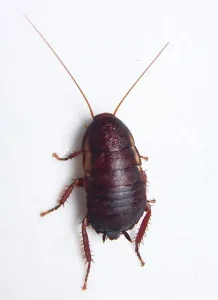
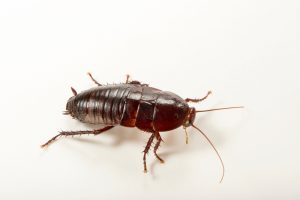
The Florida woods cockroach is one of the larger cockroach species, with adults typically measuring between 30 and 40 millimeters (1.2 to 1.6 inches) in length and about 25 millimeters (1 inch) in width. In rare cases, some individuals have been recorded at up to 62 millimeters (2.4 inches), as noted in a Florida cockroach size contest. Its body is wide, glossy, and oval-shaped, giving it a robust, tank-like appearance. The coloration ranges from dark brown to nearly black, though recently molted individuals may appear reddish-brown.
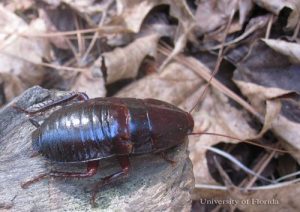
Unlike many cockroaches, the Florida woods cockroach has very short forewings, called tegmina, which extend only slightly past the mesonotum (a plate behind the head). Hind wings are absent, rendering the species incapable of flight. This limited wing development contributes to its slow, deliberate movement compared to other cockroaches.
The Florida woods cockroach size makes it easily distinguishable from smaller household pests like the German cockroach. Its large, flattened body and lack of functional wings also set it apart from the American cockroach, another species sometimes called a “palmetto bug.” Males and females are similar in appearance, but females have a V-shaped notch in the rectal area, while males have filament-like structures near their cerci (sensory appendages at the end of the abdomen). These features aid in identification and are particularly noticeable due to the cockroach’s substantial size.
Habitat and Behavior
The Florida woods cockroach thrives in warm, humid, subtropical, or tropical climates, making Florida and the West Indies ideal environments. It is cold-intolerant and cannot survive in cooler regions. Outdoors, it prefers damp, shaded areas rich in organic matter, such as under leaf litter, in tree holes, under logs, lumber, or bark, and within dense vegetation like palmetto plants, which inspired its “palmetto bug” nickname.
These habitats provide ample moisture and food sources, including decaying plants, moss, mold, and other organic debris. The cockroach is primarily nocturnal, foraging at night and hiding during the day to avoid predators and dehydration.
While the Florida woods cockroach is predominantly an outdoor species, it occasionally wanders into homes, especially during heavy rainfall or when seeking shelter. It is most likely to enter damp areas like bathrooms, basements, or attics, often carried in on firewood or through open windows and doors. However, it does not typically establish infestations indoors, as it struggles to survive in dry, air-conditioned environments. Its slow movement and lack of urgency when disturbed further distinguish it from more agile indoor cockroaches.
Florida Woods Cockroach Nymph and Baby Development
The juvenile stages of the Florida woods cockroach, known as nymphs or babies, undergo a series of molts before reaching adulthood. Florida woods cockroach nymphs emerge from eggs as small, wingless versions of the adult, measuring just a few millimeters in length. Initially, they are bright white and soft but quickly darken to a reddish-brown or black hue as their exoskeleton hardens. Nymphs have wide yellow bands on the thorax, which fade as they mature. They lack the foul-smelling defense mechanism of adults and have underdeveloped cerci.
The Florida woods cockroach baby stage involves six to eight molts over 100 to 120 days, depending on temperature and humidity. Each molt increases the nymph’s size and brings it closer to adult morphology. Nymphs feed on the same organic matter as adults and are often found in the same habitats, such as under logs or in leaf litter. Unlike some cockroach species, Florida woods cockroach babies do not typically survive indoors, as they require high moisture levels to thrive. Their slow development and outdoor preference make them less likely to contribute to household infestations.
Florida Woods Cockroach Eggs and Reproduction
The reproductive cycle of the Florida woods cockroach is well-adapted to its outdoor environment. Females produce Florida woods cockroach eggs encased in a dark brown ootheca (egg case), measuring 14 to 16 millimeters (0.55 to 0.63 inches) in length. Each ootheca contains 21 to 23 eggs, with indentations indicating the position of each egg. Females begin producing oothecae about 55 days after reaching adulthood and can create a new one approximately every eight days. The ootheca is typically buried in soil, glued to a surface like a log or leaf, or hidden in a moist, protected area to ensure the eggs’ survival.
The eggs hatch in about 48 to 50 days at temperatures between 30 and 36°C (86 to 97°F). The Florida woods cockroach eggs are vulnerable to parasitism by certain wasp species, such as Aprostocetus hagenowii and Anastatus floridanus, which lay their eggs inside the ootheca. These parasitic wasps can destroy hundreds of cockroach eggs per ootheca, significantly reducing the population.
Parthenogenesis (asexual reproduction) is possible but rare, and nymphs produced this way rarely reach adulthood. The high reproductive rate and protective ootheca placement help the Florida woods cockroach maintain its population despite predation and environmental challenges.
Florida Woods Cockroach Predators
The Florida woods cockroach faces a variety of predators in its natural habitat. Its foul-smelling defensive spray, which can be ejected up to one meter (3.3 feet), serves as a primary deterrent against many would-be attackers. This secretion, produced by a gland under the abdomen, is effective against small mammals, birds, and some insects, causing irritation to the eyes and skin or triggering escape responses in other cockroaches.
However, certain predators have adapted to overcome this defense. For example, studies in central Florida showed that while the mouse species Peromyscus polionotus is deterred by the spray, Peromyscus gossypinus can avoid exposure by manipulating the cockroach’s body to feed from the head end.
In addition to mammals and birds, the Florida woods cockroach is preyed upon by parasitic wasps that target its eggs, as mentioned earlier. Other natural predators include frogs, lizards, spiders, and certain beetles that inhabit the same wooded areas. Despite these threats, the cockroach’s nocturnal behavior, preference for hidden habitats, and chemical defense help it evade predation. Its large size and slow movement make it an easier target than smaller, faster cockroaches, but its spray provides a critical survival advantage.
Florida Woods Cockroach Bite and Health Risks
A common concern is whether the Florida woods cockroach can bite. The answer is that while it is physically capable of biting with its simple, backward-facing mouthparts, it does not typically bite humans or pets. The Florida woods cockroach bite is rare and usually occurs only if the insect is handled or feels threatened. Even then, the bite is not medically significant, causing at most minor irritation or discomfort. Unlike some household cockroaches, the Florida woods cockroach does not feed on human food, feces, or rotting flesh, reducing its potential to spread bacteria or viruses.
However, the Florida woods cockroach can pose minor health risks. Its defensive secretion, often described as smelling like amaretto or a strong, unpleasant odor, can irritate human eyes and skin upon contact. In rare cases, prolonged exposure to the secretion in confined spaces may cause respiratory discomfort. Additionally, the cockroach’s feces, shed exoskeletons, and body parts can act as allergens, potentially triggering allergic reactions or asthma symptoms in sensitive individuals, especially if the insect enters a home. While not a significant health threat, these factors make it undesirable to have Florida woods cockroaches in houses.
Florida Woods Cockroach in House: Causes and Prevention
Although the Florida woods cockroach prefers outdoor environments, it occasionally enters homes, leading to concerns about Florida woods cockroaches in houses. Common entry points include open windows, doors, gaps in walls, or cracks in foundations, especially during rainy seasons when the cockroaches seek drier shelter. They may also be carried indoors on firewood, yard debris, or other items brought from outside. Once inside, they are drawn to damp areas like bathrooms, basements, or attics, where moisture accumulates. Unlike German or American cockroaches, the Florida woods cockroach does not thrive indoors and is unlikely to establish a breeding population due to its need for high humidity.
Preventing Florida woods cockroaches in houses involves several practical steps:
- Seal Entry Points: Install weather stripping, repair damaged screens, and caulk cracks in walls, foundations, and around windows and doors to block access.
- Remove Outdoor Hiding Spots: Clear leaf litter, woodpiles, and dense vegetation away from the home’s foundation. Store firewood on racks elevated off the ground and at least 12 to 24 inches from the house.
- Maintain Sanitation: Keep indoor areas dry and clean, fixing leaky pipes and reducing clutter that could provide hiding spots.
- Inspect Items: Check firewood, groceries, or outdoor equipment for cockroaches before bringing them inside.
- Use Screens: Ensure windows and vents have tight-fitting screens to prevent entry.
If a Florida woods cockroach is found indoors, it can often be removed manually or with a vacuum, as infestations are rare. For persistent issues, professional pest control services can apply targeted treatments, such as baits or insecticides, to manage the problem.
Is the Florida Woods Cockroach Poisonous?
The question of whether the Florida woods cockroach is poisonous is a common one, particularly due to its foul-smelling spray. The Florida woods cockroach is not poisonous in the sense of producing venom or toxins that are harmful when ingested or through contact. Its defensive secretion, while irritating to the eyes, skin, and respiratory system, is not lethal to humans or pets. The secretion’s primary purpose is to deter predators, not to poison them. In confined spaces, the spray may be toxic to the cockroach itself, but this is not a concern for humans in typical encounters.
The Florida woods cockroach does not carry diseases like some indoor cockroach species, as it does not feed on contaminated materials. However, its presence can still cause discomfort due to its odor and potential allergen production. For most people, the cockroach poses no significant danger beyond its unpleasant smell and appearance, making it more of a nuisance than a health hazard.
Control and Management Strategies
Controlling the Florida woods cockroach focuses on prevention and targeted interventions, given its preference for outdoor habitats. Outdoors, homeowners can reduce cockroach populations by eliminating favorable conditions:
- Clear Debris: Remove mulch, leaf piles, and decaying wood from around the home to reduce hiding spots.
- Manage Vegetation: Trim shrubs and keep plants away from the foundation to minimize damp, shaded areas.
- Use Baits and Insecticides: Granular baits or liquid insecticides can be applied to flowerbeds, ground cover, or the home’s perimeter to create a barrier. Boric acid or silica gel can also be used to dehydrate and kill cockroaches in specific areas.
For indoor control, vacuuming up cockroaches, eggs, and debris, followed by thorough sanitation, is often sufficient. Professional pest control services may use insect growth regulators, pyrethroids, or other pesticides for more extensive issues, ensuring treatments are safe for humans and pets. Regular maintenance, such as checking plumbing for leaks and keeping attics dry, further reduces the likelihood of indoor encounters.
Ecological Role and Benefits
Despite its reputation as a pest, the Florida woods cockroach plays a beneficial role in its ecosystem. As a decomposer, it feeds on decaying organic matter, helping to break down plant material and recycle nutrients in wooded areas. This process supports soil health and contributes to the nutrient cycle in forests and other natural habitats. The cockroach’s presence also supports the food web, serving as prey for various predators, including birds, mammals, and insects.
Unlike invasive cockroach species, the Florida woods cockroach is native to its range and does not disrupt local ecosystems. Its limited impact on human dwellings further reduces its status as a pest, making it an important part of the southeastern United States’ biodiversity.
Comparison with Other Cockroach Species
The Florida woods cockroach is often confused with other large cockroaches, such as the American cockroach (Periplaneta americana) and the oriental cockroach (Blatta orientalis). Key differences include:
- American Cockroach: Larger (up to 2 inches), reddish-brown, with fully developed wings capable of gliding. It is a common indoor pest and feeds on a wide range of materials, including human food.
- Oriental Cockroach: Similar in size and color to the Florida woods cockroach, but females have more developed wings (though still non-functional). It prefers cooler, damp environments and is more likely to infest basements.
- Florida Woods Cockroach: Slower, wingless, and primarily outdoor-dwelling, with a distinctive foul-smelling spray. It does not colonize homes and feeds mainly on decaying plant matter.
These distinctions are crucial for accurate identification and effective pest management, as control strategies vary by species.
Cultural Significance and Nicknames
In Florida, the Florida woods cockroach is deeply embedded in local culture, often referred to as the “palmetto bug” due to its association with palmetto plants. This nickname is so widespread that it is sometimes applied to other large cockroaches, causing confusion. Other names, like “Florida stinkroach” or “skunk roach,” highlight its defensive spray, which some describe as resembling the smell of amaretto. These colorful monikers reflect the cockroach’s prominence in the region and its impact on residents, who may encounter it in yards, gardens, or occasionally indoors.
The Florida woods cockroach has also appeared in local lore and even competitions, such as the aforementioned size contest, showcasing its larger-than-life presence in Florida’s ecosystem and imagination. Its slow, non-threatening behavior makes it a less feared pest than other cockroaches, though its odor ensures it remains memorable.
Frequently Asked Questions About Florida Woods Cockroach
- What is a Florida Woods Cockroach?
The Florida Woods Cockroach, also known as the palmetto bug or stinking cockroach, is a large, slow-moving cockroach native to the southeastern United States. It measures 1.2 to 1.6 inches long, is reddish-brown to black, and lacks fully developed wings, making it unable to fly. - Why is it called the stinking cockroach?
When threatened, the Florida Woods Cockroach releases a foul-smelling chemical spray from a gland under its abdomen to deter predators. This spray can travel up to one meter and may irritate human skin or eyes, earning it nicknames like Florida stinkroach or skunk roach. - Where do Florida Woods Cockroaches live?
These cockroaches prefer outdoor, damp, and shaded habitats like leaf litter, woodpiles, palmetto trees, and mulch. They thrive in warm, humid climates and are rarely found indoors unless accidentally brought in, such as on firewood. They favor areas like bathrooms or basements if they enter homes. - Are Florida Woods Cockroaches dangerous to humans?
While not as harmful as other cockroaches, they can pose minor health risks. Their feces and shed exoskeletons may trigger allergies or asthma, and their defensive spray can irritate skin or eyes. They are not known to spread diseases like German cockroaches but can carry bacteria. - How do Florida Woods Cockroaches reproduce?
Females produce egg cases containing 21–23 eggs, which they glue to surfaces like logs or leaves. Eggs hatch in about 48–50 days, and nymphs molt 6–8 times before reaching adulthood. They can reproduce with or without fertilization, though unfertilized eggs rarely develop fully. - How can I prevent Florida Woods Cockroaches from entering my home?
To prevent infestations, seal cracks and gaps, use tight-fitting window screens, and maintain weather stripping. Remove yard debris, leaf litter, and woodpiles near the home, and inspect firewood before bringing it indoors. Keeping a clean, dry indoor environment also helps. - What are effective control methods for Florida Woods Cockroaches?
Control includes removing outdoor habitats, using granular baits or liquid insecticides around the home’s foundation, and vacuuming up roaches and egg cases indoors. Professional pest control services can use baits, boric acid, or silica gel for effective elimination.
Conclusion on Florida Woods Cockroach
The Florida woods cockroach is a fascinating and distinctive insect that embodies the unique ecology of the southeastern United States. Its size, nymph and baby stages, predators, eggs, and behavior set it apart from other cockroaches, while its lack of bite or poisonous traits and minimal presence in houses make it a relatively harmless pest.
By understanding its habits and implementing simple prevention measures, homeowners can coexist with this native decomposer without issue. Whether encountered in a palmetto plant or a damp corner of a bathroom, the Florida woods cockroach serves as a reminder of nature’s complexity and the important roles even the most unassuming creatures play in their environments.
