

Can You Use GPS While Stranded in the Ocean? When stranded in the vast, unpredictable ocean, having a Global Positioning System (GPS) device can mean the difference between life and death. GPS technology has revolutionized marine navigation, allowing lost individuals to determine their precise location and signal for rescue effectively. But how reliable is GPS when you’re floating in open water?
Unlike land-based survival, where landmarks and roads can provide guidance, the ocean is a featureless expanse that can disorient even the most experienced sailors. This makes GPS an essential survival tool for anyone navigating the seas. Whether you’re a recreational boater, deep-sea fisherman, or adventurer, understanding how to use GPS properly in an emergency is crucial.
This guide explores how GPS works in open water, the best GPS devices for marine survival, how to power and maintain your GPS while stranded, and the most effective ways to use GPS for rescue operations. Knowing how to operate a GPS in an ocean survival scenario can increase your chances of being found quickly and ensure your safety in the open sea.
Can You Use GPS While Stranded in the Ocean?
The short answer is yes, but there are important factors to consider. GPS signals cover the entire planet, including the open ocean, making it possible to determine your exact latitude and longitude anywhere on Earth. However, using GPS in a survival situation presents unique challenges.
- GPS Signal Reception – GPS devices rely on satellites orbiting the Earth. The good news is that oceanic regions have full satellite coverage, so signal reception is generally strong. However, storms, dense cloud cover, or interference from large metal structures (like shipwrecks) can momentarily disrupt signals.
- Battery Life – A GPS device is only useful if it has power. Many survival-grade GPS units use solar charging, hand cranks, or long-lasting lithium batteries to ensure continued operation.
- Durability and Water Resistance – Not all GPS devices are designed for prolonged exposure to water. A marine-grade, waterproof GPS unit is essential in ocean survival.
- Communication Capabilities – Some GPS devices come with built-in emergency beacons (EPIRBs or PLBs) that transmit your location to rescue agencies. Having a GPS that can send SOS signals is critical in an emergency.
While GPS alone won’t save you, it is a powerful tool for survival when used correctly. Pairing it with emergency distress signals, radio communication, and survival tactics increases your chances of being rescued.
How GPS Works in Open Water
GPS operates using a network of at least 24 satellites orbiting the Earth. These satellites constantly transmit signals, which GPS devices on the surface receive to calculate your precise location.
In open water, where there are no obstacles like buildings or mountains, GPS signals are usually strong and accurate. However, ocean survival presents unique conditions that can affect how GPS functions:
- Clear Line of Sight to Satellites – Unlike on land, where tall buildings and trees can block signals, the ocean provides an unobstructed view of the sky, ensuring good reception.
- Movement of Water – If you’re in a lifeboat or floating on debris, the constant movement of waves can make it harder to keep a stable reading on some GPS devices. Using a buoyant or handheld GPS can help maintain signal accuracy.
- Drifting with Currents – GPS will accurately track your movement, but ocean currents can push you away from your original location. Understanding how to interpret GPS coordinates and adjust for drift is essential.
- Cloud Cover and Weather Conditions – While GPS signals penetrate clouds, extreme weather, such as lightning or heavy storms, may cause temporary disruptions.
| Factor | Effect on GPS in Open Water |
| Clear Skies | Strongest signal, most accurate readings |
| Cloud Cover | Minimal impact, still reliable |
| Storms & Lightning | Possible signal interference |
| High Waves | Can cause brief signal loss |
| Drifting Currents | Affects navigation but not GPS accuracy |
Understanding these factors can help maximize the effectiveness of GPS in an emergency situation and ensure you’re making the best use of this life-saving technology.
Types of GPS Devices for Marine Navigation
When it comes to ocean survival, not all GPS devices are created equal. Choosing the right GPS unit can determine how effectively you can navigate, communicate, and call for help.
1. Handheld GPS Units
- Compact, portable, and designed for rugged use.
- Some models feature built-in SOS signals and two-way messaging.
- Waterproof models are recommended for marine survival.
2. Marine GPS Chartplotters
- Primarily used for boats and larger vessels.
- Displays detailed nautical charts and integrates with boat navigation systems.
- Requires external power and may not be practical for survival unless on a lifeboat.
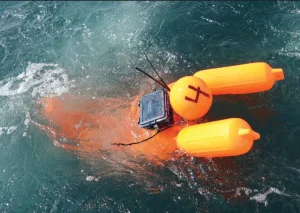
3. Emergency Position Indicating Radio Beacons (EPIRBs)
- Designed for distress signaling in open water.
- Sends a GPS distress signal to search and rescue (SAR) authorities.
- Automatically activates upon contact with water.
4. Personal Locator Beacons (PLBs)
- A compact version of an EPIRB, ideal for individuals.
- Must be manually activated, but provides precise GPS coordinates to rescuers.
- Some models include two-way communication for emergency messaging.
| Device Type | Best For | Key Features |
| Handheld GPS | Personal navigation | Portable, water-resistant, long battery life |
| Marine GPS Chartplotter | Boating & sailing | Large screen, detailed maps, requires power |
| EPIRB | Emergency distress signaling | Automatically activates, sends GPS distress signal |
| PLB | Individual survival | Compact, manual activation, direct SOS alerts |
Selecting the right device can drastically improve survival odds, ensuring that rescue teams can locate you quickly in an emergency.
Powering and Maintaining a GPS Device at Sea
Keeping a GPS device functional while stranded in the ocean requires proper power management and device maintenance. Since most GPS units rely on battery power, ensuring a continuous power source is critical.
Ways to Power a GPS at Sea:
- Solar Chargers – Many marine GPS units and survival beacons come with solar charging capabilities to extend battery life.
- Hand-Crank Generators – Some survival GPS units feature manual power options, allowing users to generate electricity.
- Spare Batteries – Carrying extra waterproof batteries ensures you have backup power.
- Low-Power Mode – Many GPS units have an energy-saving mode that extends battery life.
Maintenance Tips:
- Keep the device dry – Even waterproof models perform better when kept dry.
- Check for signal regularly – If signal loss occurs, relocate to an open area and retry.
- Store in a protective case – Protects against saltwater damage.
Proper power management ensures that your GPS remains operational when you need it most.
Using GPS to Signal for Rescue
A GPS device becomes a lifesaver when it is used to signal for help.
- Activate distress signals (PLB/EPIRB) – These send your exact GPS coordinates to emergency responders.
- Use two-way messaging (if available) – Some GPS units allow for direct messaging with rescuers.
- Share coordinates via radio – If you have a VHF marine radio, you can relay your location for faster rescue.
Using GPS effectively can expedite rescue operations, making the difference between life and death in an ocean survival scenario.
Limitations of GPS in Ocean Survival Situations

While GPS is a powerful tool for ocean survival, it is not foolproof. There are several factors that can limit its effectiveness, making it crucial to understand its shortcomings and prepare accordingly.
1. Battery Life Constraints
One of the biggest challenges is power depletion. GPS devices rely on batteries, which can run out within hours or days, depending on usage. Without a reliable charging method like solar panels or hand-crank generators, a GPS may become useless when you need it most.
2. Signal Disruptions
Although GPS signals cover the entire globe, disruptions can occur due to:
- Severe weather (storms, lightning, or thick cloud cover).
- Interference from water movement (submersion in waves may weaken reception).
- Satellite availability (if a GPS struggles to connect to enough satellites, accuracy may drop).
3. Device Durability Issues
Not all GPS devices are waterproof or designed for prolonged exposure to saltwater. Ocean conditions are harsh, and a damaged or malfunctioning GPS can leave you without crucial navigation data.
4. Limited Rescue Capabilities
Some GPS devices provide only coordinates but do not transmit distress signals. In a survival situation, having a Personal Locator Beacon (PLB) or Emergency Position Indicating Radio Beacon (EPIRB) is more effective for summoning help.
Understanding these limitations ensures you don’t solely rely on GPS but have backup plans for navigation and survival.
Alternative Navigation Methods Without GPS
If your GPS fails, you must rely on traditional navigation methods to stay oriented and increase your chances of survival. Seafarers have used these techniques for centuries to navigate vast waters safely.
1. Observing the Sun and Stars
- The sun rises in the east and sets in the west, helping you establish basic direction.
- At night, use stars like the North Star (Polaris) in the Northern Hemisphere to determine true north.
- The Southern Cross constellation helps guide direction in the Southern Hemisphere.
2. Wave and Swell Patterns
- Ocean swells generally follow consistent directions, especially near islands.
- Observing wave patterns can indicate landmasses or strong currents.
3. Bird and Marine Life Movements
- Seabirds like gulls and frigates usually stay within 50 miles of land.
- Schools of fish often move in currents that lead toward shallow waters and coastal areas.
4. Drift Estimation
- If stranded, tie a floating object (like a rope or seaweed) and observe which direction it moves to understand the ocean current flow.
| Method | Best Used For | Reliability |
| Sun & Stars | Finding cardinal directions | High, but requires clear skies |
| Wave Patterns | Identifying land proximity | Medium, depends on experience |
| Bird Movements | Indicating nearby land | High, if seabirds are present |
| Drift Tracking | Understanding ocean current flow | Medium, depends on visibility |
Using multiple navigation methods together increases your chances of staying on course and reaching safety.
Essential Survival Tips When Stranded in the Ocean
Being stranded in the open ocean is one of the most challenging survival situations, requiring resourcefulness and endurance. The key to survival is staying calm, conserving energy, and making smart decisions.
1. Stay Afloat and Conserve Energy
- If you don’t have a lifeboat, use life jackets, floating debris, or anything buoyant to stay above water.
- Avoid panicking or thrashing in the water, as it burns energy and increases dehydration.
2. Ration Water and Avoid Drinking Seawater
- Dehydration is the biggest threat in ocean survival.
- Collect rainwater using clothing or any container.
- If no water is available, minimize movement and sun exposure to reduce sweating.
3. Protect Yourself from the Sun
- Exposure can lead to severe sunburn, dehydration, and heatstroke.
- Use clothing, seaweed, or makeshift covers for shade.
4. Signal for Rescue
- Use reflective objects (mirrors, metal, or even wet plastic) to signal passing ships or planes.
- If you have a flare gun, whistle, or bright clothing, use it to attract attention.
- Write an SOS message on floating debris if rescue aircraft are in the area.
| Survival Task | Best Strategies |
| Staying Afloat | Use life vests, debris, or swim efficiently |
| Finding Water | Collect rainwater, avoid seawater |
| Avoiding Sunburn | Create shade, cover skin with fabric |
| Signaling for Rescue | Use flares, reflections, or debris |
By following these essential survival tips, you can prolong your chances of rescue and maintain mental clarity in a high-stress situation.
Frequently Asked Questions About Can You Use GPS While Stranded in the Ocean
Can GPS Work in the Middle of the Ocean?
Yes, GPS works anywhere on Earth, including the ocean, as long as the device has power and a clear view of satellites.
What Should I Do If My GPS Stops Working?
Use alternative navigation methods, such as tracking the sun, stars, and ocean currents, to stay oriented.
How Can I Signal for Help If I Have No GPS?
Use flares, reflective objects, bright clothing, or floating messages to attract rescue teams.
Can I Use My Phone’s GPS in the Ocean?
Most smartphones rely on cell towers in addition to GPS satellites. In open water, without service, a phone’s GPS may not function accurately.
How Long Will My GPS Battery Last in a Survival Situation?
It depends on the model and power source. Handheld GPS devices with solar charging or long-lasting batteries are best for survival.
Having knowledge of how to use GPS correctly and what to do if it fails can greatly improve survival chances.
Conclusion on Can You Use GPS While Stranded in the Ocean
GPS is a lifesaving tool in ocean survival, but it has limitations that require backup navigation methods and survival skills. While GPS can pinpoint your location, factors like battery depletion, signal loss, and device failure mean that knowing traditional navigation techniques is essential.
If stranded, the most important survival priorities are staying afloat, conserving energy, protecting against dehydration, and signaling for rescue. Alternative methods, such as navigating by the sun and stars, tracking ocean currents, and using seabirds as indicators of land, can help increase survival chances.
To ensure safety, always carry a waterproof GPS device, emergency beacons, solar chargers, and distress signaling tools when traveling in open waters. Understanding both technology-based and traditional survival tactics is the key to making it through an unexpected ocean survival situation.
