

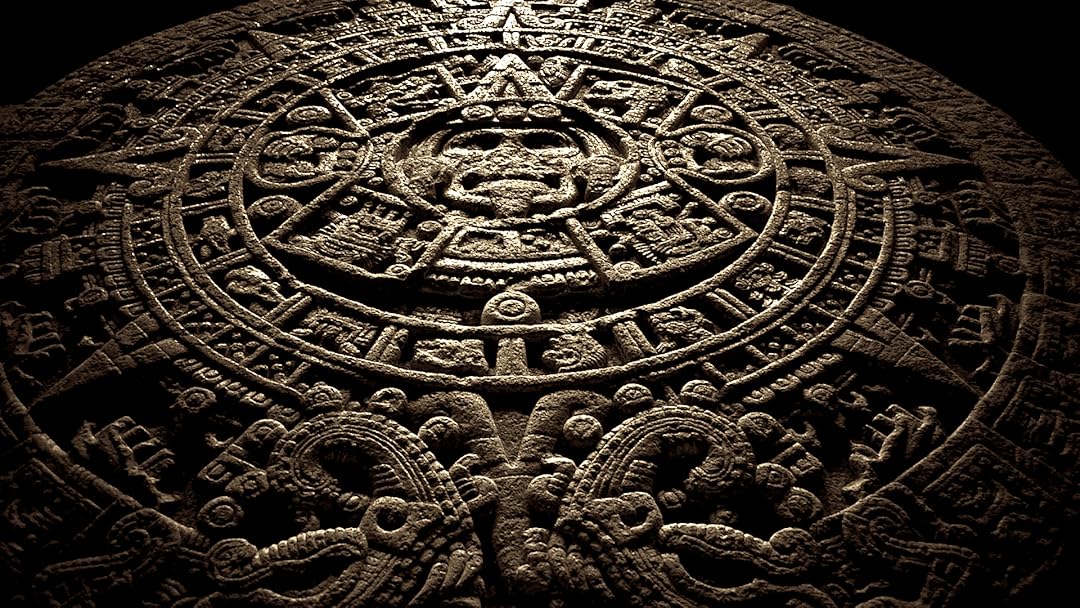
Throughout history, humanity has been fascinated by the idea of codes—whether as a means of communicating in secret, recording important information, or as tools to be deciphered. From the cryptic symbols of ancient Egypt to the binary code that drives today’s digital world, the concept of coding has evolved dramatically. However, what may surprise many is the profound influence that ancient codes continue to have on modern technology. This article explores the intersection of ancient coding systems and contemporary tech, shedding light on how the past informs the future.
The Origins of Cryptography
Cryptography, the art of writing or solving codes, can be traced back to ancient civilizations. According to the research, one of the earliest known examples is the use of hieroglyphics in ancient Egypt. These symbols were not just decorative; they carried significant meaning and required specialized knowledge to interpret. Similarly, the ancient Greeks developed the Scytale cipher, a tool used by military leaders to send secret messages. This device involved wrapping a strip of parchment around a rod of a specific diameter, with the message written across the strips. When unwrapped, the letters appeared jumbled, but when wrapped around a rod of the same diameter, the original message could be deciphered.
Another famous ancient code is the Caesar cipher, named after Julius Caesar, who used it to protect his military communications. This cipher involved shifting the letters of the alphabet by a fixed number of places. For example, a shift of three would turn the letter A into D, B into E, and so on. While simple by today’s standards, the Caesar cipher was an effective means of communication security in its time.
The Rosetta Stone and Multilingual Codes
The discovery of the Rosetta Stone in 1799 provided a key to understanding ancient Egyptian hieroglyphics. The stone featured the same text written in three different scripts: Greek, Demotic, and hieroglyphics. This allowed scholars to decode the once-mysterious symbols, revealing the language and communication methods of ancient Egypt. The Rosetta Stone can be seen as an early example of a multilingual code, a concept that is crucial in today’s globalized world where computer systems often need to process and translate information across multiple languages.
Modern technology frequently relies on similar principles. Unicode, for example, is a standard that allows computers to represent and manipulate text from different languages. Just as the Rosetta Stone was a bridge between languages and cultures, Unicode acts as a bridge in the digital realm, enabling seamless communication across various platforms and languages.
The Influence of Ancient Codes on Modern Cryptography
The principles behind ancient cryptographic techniques continue to influence modern cryptography. The Caesar cipher, for instance, laid the groundwork for more complex encryption methods. In modern times, cryptography is a cornerstone of cybersecurity, ensuring the privacy and integrity of digital communications. Advanced Encryption Standard (AES), a modern encryption protocol, shares the same goal as ancient ciphers: to protect information from unauthorized access.
One of the most significant developments in modern cryptography is the use of public-key cryptography, which allows secure communication over an insecure medium like the internet. This method relies on mathematical principles that were partially inspired by ancient number theory. For instance, modular arithmetic, which dates back to ancient Chinese and Indian mathematics, plays a crucial role in the algorithms that power public-key cryptography.
Ancient Algorithms and Modern Computing
In addition to cryptography, ancient mathematical algorithms have also had a lasting impact on modern technology. The Euclidean algorithm, developed by the ancient Greek mathematician Euclid, is still used today for computing the greatest common divisor (GCD) of two numbers. This algorithm is foundational in number theory, which underpins much of modern computer science, including cryptographic systems.
Another example is the Babylonian method for finding square roots, which is remarkably similar to the algorithms used in modern computers. The Babylonians, who lived over 4,000 years ago, developed an iterative process to approximate square roots—a method that is still taught in schools today.
These ancient algorithms demonstrate that the mathematical foundations of modern computing are deeply rooted in history. The same principles that guided the calculations of ancient scholars now drive the processors of our smartphones and computers.
The Legacy of Ancient Codes in Artificial Intelligence
The influence of ancient codes extends even into the realm of artificial intelligence (AI). AI, at its core, is about recognizing patterns and making decisions based on data—a concept not unlike decoding an ancient script. The process of training AI models often involves algorithms that can trace their origins back to ancient mathematical principles.
For instance, the concept of neural networks, which is central to AI, has parallels in ancient philosophy. The idea of interconnected systems that process information can be seen in the ancient Chinese concept of Qi, or the flow of energy through interconnected pathways. While this is more philosophical than mathematical, the holistic approach to understanding complex systems is a principle that both ancient thinkers and modern AI researchers share.
Moreover, the development of AI algorithms often involves optimizing mathematical functions, a practice that dates back to ancient Greece and India. These ancient optimization techniques have been refined over millennia and are now used in training AI models, demonstrating the enduring relevance of ancient knowledge.
Conclusion: Bridging the Past and the Future
The influence of ancient codes on modern technology is a testament to the timeless nature of human ingenuity. From cryptography to computing, the principles developed by ancient civilizations continue to shape the digital world. As we advance further into the age of technology, it is essential to recognize and appreciate the historical foundations that have made these advancements possible.
The intersection of ancient codes and modern technology is not just a matter of historical curiosity; it is a reminder that innovation is a continuous process. By understanding the past, we can better navigate the future, building on the wisdom of those who came before us. In doing so, we ensure that the legacy of ancient codes lives on in the technologies that define our world today.
