

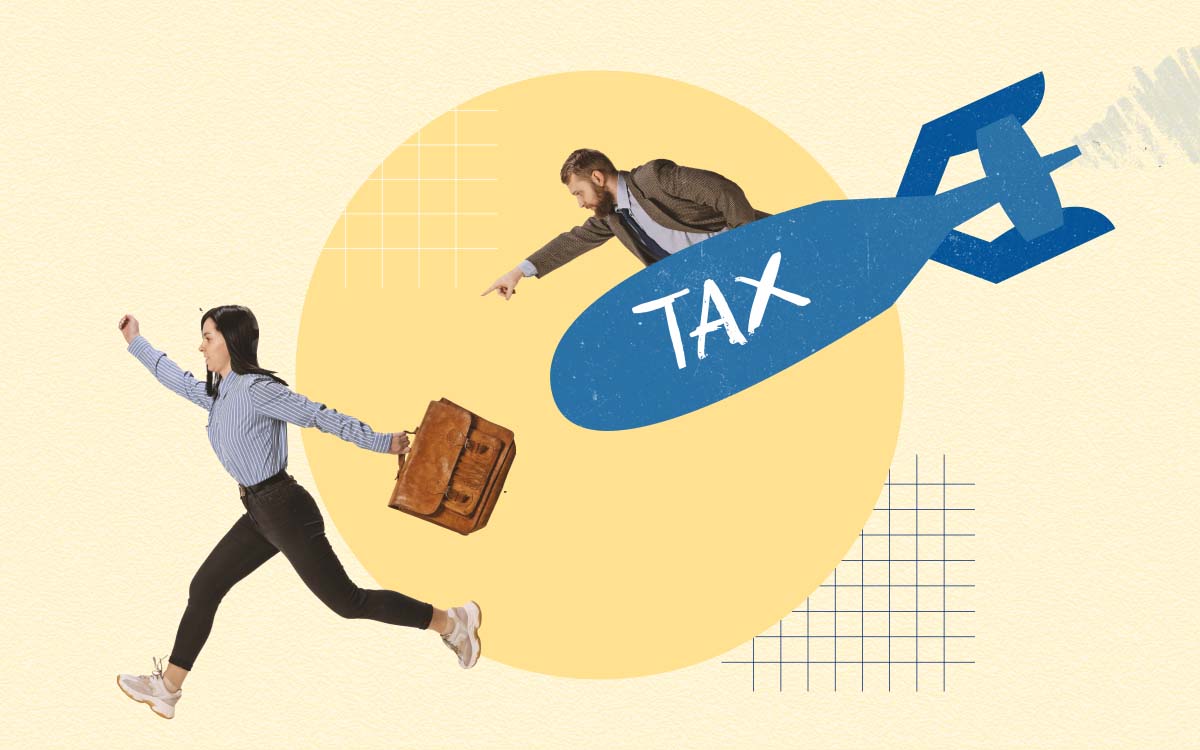
Tax Evasion is a practice wherein people intentionally hide their income, exaggerate their expenses, or use deceptive or fake schemes to avoid paying their respective taxes. Tax evasion is an extremely serious issue in the field of finance. India has various obligatory taxes, such as state border tax, goods and services tax, import-export tax, and income tax. Despite these very important and strict rules, some individuals still try to avoid paying their taxes.
In this article, we will examine the meaning of Tax Evasion, the common methods people use to evade taxes, and the various and severe penalties that such individuals can face for evading taxes. Keep reading to learn more!
What is Tax Evasion?
As mentioned earlier, Tax Evasion is when a person or company illegally avoids paying the taxes that they owe. Evading taxes generally includes the use of dishonest actions like individuals hiding their income, filing fake documents or filing false tax returns. Tax Evasion is considered a major crime in many countries including in India, and can also lead to various fines, jail time, or other actions that may be taken against the person evading taxes.
Also, tax evasion and tax avoidance are not the same. Tax evasion makes the use of illegal methods, and tax avoidance makes the use of legal methods to reduce tax payments.
Common Types of Tax Evasion
Here’s a quick look at some common types of tax evasion that can lead to penalties:
- Hiding Income by Making Cash Payments
Sometimes, people hide their income from the government to avoid taxes. This includes making cash payments so that they can avoid reporting this to the tax authorities. For example, sometimes people may pay their landlords cash so that the landlords do not declare this transaction.
- Misreporting Income on Tax Returns
Oftentimes, individuals provide false information on tax returns to pay less tax by not reporting their overall income, investments and deductions properly.
- Falsely Presenting Financial Statements
Some individuals may tweak their bank balance sheets and profit statements to make it look like they earned less income than they actually did. Plus, businesses sometimes make up invoices or receipts to make it look like they spent more money than they really did. This helps them lower the amount of taxes they have to pay.
- Creating Fake Documents for Tax Exemption
People, to evade taxes, create false documents to claim tax exemptions meant for disadvantaged groups, even if they are not eligible for them.
- Offshore Accounts
Some individuals (often the more privileged class) keep money in bank accounts outside India to avoid disclosing it to the Indian tax authorities to evade taxes. These accounts are usually in countries with strong laws protecting banking privacy. This makes it hard for tax authorities to monitor and confirm income.
- Creating Shell Companies
Creating shell companies or fake businesses is another way people avoid paying taxes. Such companies only exist on paper and are used by different people and businesses to move illegal money around, make their expenses look higher or to do other illegal things, and evade taxes.
- Bribery
Paying bribes to tax officials to lower or eliminate tax liabilities is also a very common method of evading taxes that is used by people.
- Black Money
When people earn money illegally and don’t tell tax authorities about it, it adds to the pool of black money in the economy. To hide this money, people have started looking for various ways to convert it into legal money so that they can avoid taxes.
- Misusing Retirement Accounts
Sometimes, the illegal use of retirement accounts can be made to hide income from taxation. This may be seen as tax evasion.
- Non-Payment of Taxes
Some individuals or companies intentionally avoid paying taxes that they owe to the government. This is a straightforward way of tax evasion.
Penalties of Tax Evasion
For evasion of taxes, the Income Tax Department of India can impose different types of penalties on people or businesses who try to escape taxes. The various penalties for tax evasion are mentioned below:
- Not Submitting the Income Tax Return
If you don’t file your income tax return (ITR) on time, you’ll be charged a late fee. The current fee is Rs. 5,000, but the tax officer can adjust it.
- Giving Wrong or Concealing PAN Card Details
If you provide incorrect PAN card details or leave them out when filing your Income Tax Return (ITR), you may be penalised. Not providing your PAN card number can result in a higher tax rate, with a deduction of ₹10,000 or more.
- Providing Incorrect Information about Income
If you hide or understate your income on tax returns, in addition to the taxes owed, you will be penalised as per the following circumstances:
- Voluntary Admission: If you confess to hiding income on your own, you’ll be fined 10% of that amount plus interest.
- Unintentional Error: If you mistakenly report less income, the penalty is 50% of the understated amount.
- Deliberate Misreporting: Intentionally lying on your taxes to avoid paying can result in a penalty of 300% of the unpaid tax on the hidden income.
- Non-Obedience to TDS Regulations
Individuals or businesses that are responsible for deducting or collecting tax at source must have a TAN which is Tax Deduction and Collection Account Number. Penalties for not complying with this rule include:
- Rs. 10,000 for not obtaining TAN.
- Rs. 200 per day for late submission of TDS/TCS, up to the amount deducted.
- Not Completing Required Audits
Businesses and professionals with a certain amount of sales or earnings must have their financial records checked by auditors. If they don’t do this, they can face penalties. Under Section 92(E) a penalty of Rs. 1 lakh can be charged for not submitting an accountant’s report on international transactions. Under Section 92(D) a penalty of 2% of transaction value is charged for skipping required documentation on transactions. And under Section 44AB a penalty is Rs. 1.5 lakh or 0.5% of turnover, whichever is lower, is charged for not conducting an audit.
- Not Meeting the Requirements Stated in the Demand Notice
If the Income Tax Department identifies discrepancies in your tax return, they may issue a demand notice. It’s important to address issues promptly (in a timely manner) to avoid penalties.
Conclusion
Tax evasion is considered a crime in India and should be avoided at all costs. If you repeatedly try to evade taxes, you can face harsh punishments. That’s why it’s a must to pay attention to your income tax details, file timely returns, and follow all the rules set by the Government of India as well as India’s Income Tax Department. So, be a smart and obedient citizen by filing your taxes on time!
