

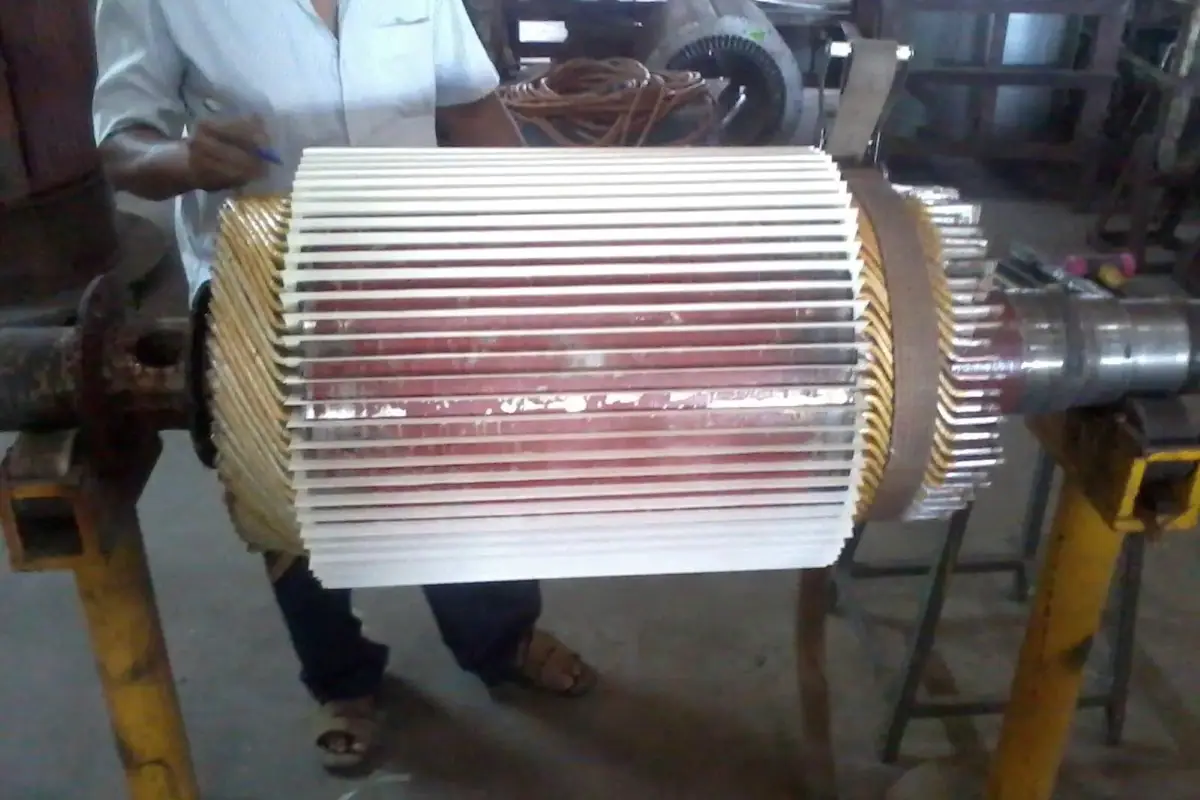
The slip ring induction motor is a testament to electrical engineering’s evolution, merging historical significance with modern applications. This post aims to demystify its components, particularly focusing on the slip ring—an essential yet often overlooked component. From industrial manufacturing to complex machinery applications, understanding the slip ring induction motor is key to innovation in various sectors.
What is a Slip Ring?
At its core, a slip ring facilitates the transmission of electrical power and signals across rotating surfaces. Crucial within the context of induction motors, it enables continuous power supply to the rotor, distinguishing slip ring motors from their counterparts by offering enhanced control over motor operation.
Anatomy of a Slip Ring Induction Motor: A Closer Look
In the realm of electric motors, the slip ring induction motor occupies a special spot, admired for its unique design and versatile functionality. Taking a closer look at its anatomy not only reveals the engineering marvel it is but also helps in understanding the seamless orchestration of its components that make it indispensable in applications requiring speed control and high starting torque. Here, we delve into the details of the slip ring induction motor diagram, followed by a breakdown of its core components: the rotor, stator, and slip rings.
The diagram of a slip ring induction motor is not just a representation but a window into its soul. It meticulously outlines the spatial arrangement and connectivity between various parts, providing an immediate sense of complexity and precision. This blueprint becomes invaluable for anyone seeking to comprehend the motor’s operational dynamics without dismantling its physical counterpart.
At the heart of the slip ring induction motor lie its primary components:
Rotor: The rotor is essentially the moving part of the motor, ingeniously designed to convert electrical energy into mechanical energy. In slip ring motors, the rotor is characterized by a series of wound coils connected through the slip rings to external circuits. This configuration facilitates the regulation of the rotor’s resistance, a feature distinctive to slip ring motors that greatly enhances their start-up performance and affords finer control over speed.
Stator: The stator forms the stationary part of the motor, housing a set of coils powered by the electrical source. It plays a pivotal role in generating the magnetic field necessary for motor operation. The interaction between the stator’s magnetic field and the rotors induces the rotation of the latter, underpinning the fundamental working mechanism of the motor. The design and material of the stator also significantly influence the efficiency and performance of the motor.
Slip Rings: The slip rings are the eponymous components of the slip ring induction motor, embodying its defining feature. These are electrically conductive rings mounted on the rotor shaft but insulated from it. They maintain a constant electrical connection between the rotor windings and the external circuit through brushes that lightly touch the rings as they rotate. This unique setup allows for the adjustment of the motor’s performance characteristics by varying the resistance in the rotor circuit.
The coherent orchestration of these components within the slip ring induction motor results in a system that stands out for its flexibility in controlling motor speed and its robustness in handling heavy loads and high start-up torques. Understanding the anatomy and function of each component sheds light on why slip ring induction motors are favored in applications where control, torque, and efficiency are paramount, ranging from heavy machinery to complex industrial installations.
Slip Ring Induction Motor Working Principle
The working principle of a slip ring induction motor might seem complex at first glance, but it can be distilled into a few basic concepts that highlight its unique functionality and efficiency. At its core, the slip ring induction motor operates on the principle of electromagnetic induction, a phenomenon where an electric current is generated in a conductor by changing the magnetic field around it. When power is supplied to the stator of the motor, it generates a rotating magnetic field. This field interacts with the conductors on the rotor, inducing a current in them due to electromagnetic induction. However, unlike in a standard induction motor, the rotor in a slip ring motor is connected to external resistances through the slip rings and brushes, allowing control over the current flow and, subsequently, the motor’s speed and torque characteristics.
This adjustable resistance in the rotor circuit is what sets the slip ring induction motor apart, providing a means to control the motor’s performance explicitly. During startup, increased resistance is introduced to limit the starting current and increase the starting torque, facilitating a smoother start-up with less stress on the electrical and mechanical components of the motor and the connected machinery. As the motor reaches its operational speed, the resistance can be gradually reduced to maximize efficiency.
Comparison with Other Types of Motors
When compared to other types of motors, particularly squirrel-cage induction motors, and direct current (DC) motors, the slip ring induction motor exhibits distinct efficiencies and operational advantages:
- Squirrel-Cage Induction Motors: These are simpler in construction and less expensive than slip ring motors; however, they lack the same level of control over starting torque and speed. Squirrel-cage motors typically experience higher starting currents and lower starting torque compared to slip ring motors, making the latter more suitable for applications requiring heavy loads to be started with minimal electrical stress.
- Direct Current (DC) Motors: DC motors provide excellent control over speed and torque, rivaling that of slip ring induction motors. However, they tend to be more costly and require more maintenance due to their commutators and brushgear, making them less desirable in larger, industrial applications. Slip ring induction motors, with their capability for speed control and high starting torque, bridge the gap by offering a more efficient and less maintenance-intensive solution in environments where these characteristics are crucial.
In terms of operation efficiency, slip ring motors are designed to optimize performance through the adjustment of resistance, allowing them to operate more efficiently under variable load conditions compared to their counterparts. This advantage becomes particularly evident in industrial applications where the motor needs to frequently start under heavy load or where speed control is necessary to optimize process outcomes. The inherent design of slip ring induction motors, permitting fine-tuned control over their operation without incurring significant efficiency losses, underscores their preference in specific sectors over other types of motors.
Slip Ring Induction Motor Speed Control and Performance
Controlling the speed of a slip ring induction motor is a nuanced process that hinges on harnessing the foundational principles of the motor’s design. At the core of this speed control mechanism is the external resistance connected via the slip rings and brushes to the rotor circuit. When alternating current flows through the stator of the motor, it generates a magnetic field that induces a current in the rotor. By adjusting the external resistance in the rotor circuit, we can effectively change the rotor current and, consequently, the torque and speed of the motor.
The principle is deceptively simple: increasing the resistance will lead to a decrease in current and an increase in the torque – up to a point. This increased torque available at startup helps in driving loads that require a significant amount of power to set in motion. Once the motor approaches the desired speed, the resistance can be gradually decreased to optimize the motor’s operating efficiency, drawing on the robust relationship between resistance, slip, and speed.
Slip Ring Induction Motor Formula
Delving into the performance of slip ring induction motors involves an introduction to the slip formula which is central to understanding their operation. The formula is:
[\text{Slip} (s) = \frac{\text{Ns – Nr}}{\text{Ns}}]
where ( \text{Ns} ) is the synchronous speed of the stator’s magnetic field and ( \text{Nr} ) is the actual speed of the rotor. Slip (( s )) is a dimensionless value that represents the difference in speed between the stator field and the rotor. A higher slip means a lower rotor speed relative to the magnetic field, and adjusting the resistance affects the slip proportionally.
Moreover, the torque of a slip ring induction motor can be expressed by the following torque formula:
[\text{Torque} (T) = \frac{k \times \text{Rotor Current}^2 \times \text{Rotor Resistance}}{\text{Slip}}]
In this formula, ( k ) is a constant that includes the motor’s physical characteristics, the rotor current is affected by the external resistance, and the rotor resistance is the total resistance of the rotor circuit including external resistance. By manipulating these variables, particularly the slip and the rotor resistance, we can achieve precise control over the motor’s torque and speed characteristics.
Impact of External Resistance
External resistance directly influences the ‘slip’ in the motor, which determines at what rotor speed the motor will produce the highest torque, known as the “pull-out torque.” The higher the external resistance, the higher the slip at which the pull-out torque occurs. This allows the motor to start heavy loads with ease. When the motor reaches close to its rated speed, this resistance can be decreased or eliminated, helping it to run efficiently at a lower slip. Hence, by managing external resistance, we can manipulate speed and torque to align with the requirements of different operating conditions.
This means that the slip ring induction motor has a significant advantage in applications requiring variable loads and starts. It ensures smoother ramp-up to full speed, minimizing mechanical stress and optimizing energy consumption throughout varying phases of operation. Effectively, slip ring induction motors deliver delicate control over operation speed without sacrificing the motor’s lifespan or performance—a balanced key to extending the life of both the motor and the machinery it powers.
Slip Ring Induction Motor Applications
Slip ring induction motors, especially those leveraging the robust three-phase design, are widely used across an extensive array of applications. Their rugged construction, flexibility in speed control, and superior starting torque make them suitable for challenges posed in various domains. The broad versatility manifested in their use underscores their value not only as prime movers in industrial applications but also in specialized case scenarios where meticulous motor operation is crucial.
Industrial Applications
Numbered among the most common applications for slip ring induction motors are those challenging tasks necessitating high starting torques and variable speed control. These motors are often found in:
- Pump Systems: Pumping systems, including those in the water treatment, oil, and gas industries, frequently employ slip ring induction motors, wherein the motor’s adjustable speed capability can synchronize with the variable demand in the system.
- Conveyor Systems: Used extensively in mining operations and other material handling scenarios, conveyor systems benefit greatly from the slip ring motor’s adjustable torque to accommodate heavy loads and different conveyor speeds, ensuring safe, efficient material transport.
- Compressors: In industrial settings, compressors often deal with varying load conditions. As such, using slip ring motors can effectively match the compressor’s speed, optimizing energy consumption and operational efficiency.
Specific Industry Examples
Several unique capabilities of slip ring motors have resulted in their widespread adoption in specialized industries:
- Maritime Shipping: Electric propulsion systems aboard ships often use slip ring induction motors due to their ability to start under heavy load, and the speed control capability essential for tasks like docking and maneuvering.
- Electric Trains and Trams: The high starting torque and variable speed characteristics of slip ring motors serve electrically powered locomotives very well. Motor speed control is indispensable for varying track conditions, gradients, and loads, ensuring a smooth and efficient ride.
- Metal Industry: Metal rolling mills rely heavily on slip ring motors due to their ability to handle massive mechanical loads and finely adjust the speed of rolling tables, thereby achieving the desired metal thickness with excellent precision.
In essence, the virtue of a slip ring induction motor is its ability to offer a high degree of controllability, allowing for firm mastery over speed and torque. As a result, it can meet the diverse and demanding needs presented by various industries, be it heavy-duty, robust applications or those requiring fine, sensitive adjustments.
Choosing the Right Slip Ring Induction Motor
Selecting the right slip ring induction motor is a task that hinges not only on understanding the technical parameters of your application but also on choosing from amongst a vast array of manufacturers who can supply a product that is reliable, efficient, and cost-effective. With this in mind, there are certain key factors you should always consider when on the quest for the right slip ring induction motor.
Selecting Slip Ring Induction Motor Manufacturers
Choosing the right manufacturer is a crucial step in obtaining a motor that perfectly suits your needs. Here are some tips to guide your selection process:
- Reputation: Look at the manufacturer’s track record in providing reliable and durable motors. Check for customer reviews, client testimonials, and any industry recognitions the manufacturer might have received.
- Expertise and Experience: How long has the manufacturer been in the business? Experienced manufacturers possess a deep understanding of motor design, which translates into higher efficiency, reliability, and performance of their products.
- Customer Support: A good manufacturer provides exceptional after-sales support, including technical assistance, spare parts availability, and warranty services. They should be able to provide prompt and professional help when it’s needed.
- Customization Options: Sometimes, off-the-shelf products may not meet all your requirements. A manufacturer that offers customization options can design and build motors that precisely fit your application’s unique specifications.
Key Factors: Reliability, Performance, and Cost-Efficiency
When assessing a slip ring induction motor, several factors should be at the forefront of your evaluation—reliability, performance, and cost-efficiency.
- Reliability: A reliable motor should have a long lifespan and require minimal maintenance. Look for high-quality materials, insulation, and protection systems that guard the motor from overheating, overloading, and other potential issues.
- Performance: The motor you choose should not only meet your application’s torque and speed requirements but also provide smooth speed control, exceptional starting torque, and efficient operation under diverse load conditions.
- Cost-Efficiency: While the upfront cost is a significant consideration, it should not be the only factor. Consider the motor’s energy efficiency, as a more efficient motor can lead to considerable electricity savings over time. Factor in maintenance costs, lifespan, and potential downtime due to motor faults.
Making an informed choice requires a holistic understanding of your application, a careful assessment of your needs, and a thoughtful evaluation of available options. By focusing on these essential aspects, you can ensure that the slip ring induction motor you select not only fulfills your immediate requirements but also offers long-term reliable service, superior performance, and significant cost savings.
Slip ring induction motors meld historic ingenuity with modern-day applications, offering unparalleled versatility and effectiveness. This exploration encourages further learning through additional resources, such as detailed PDFs, fostering a deeper understanding of these powerful machines. With the right knowledge, selecting and utilizing slip ring induction motors becomes a strategic advantage in various industrial applications.
This comprehensive look into slip ring induction motors combines technical depth with practical advice, providing valuable insights for professionals, students, and enthusiasts alike.
