

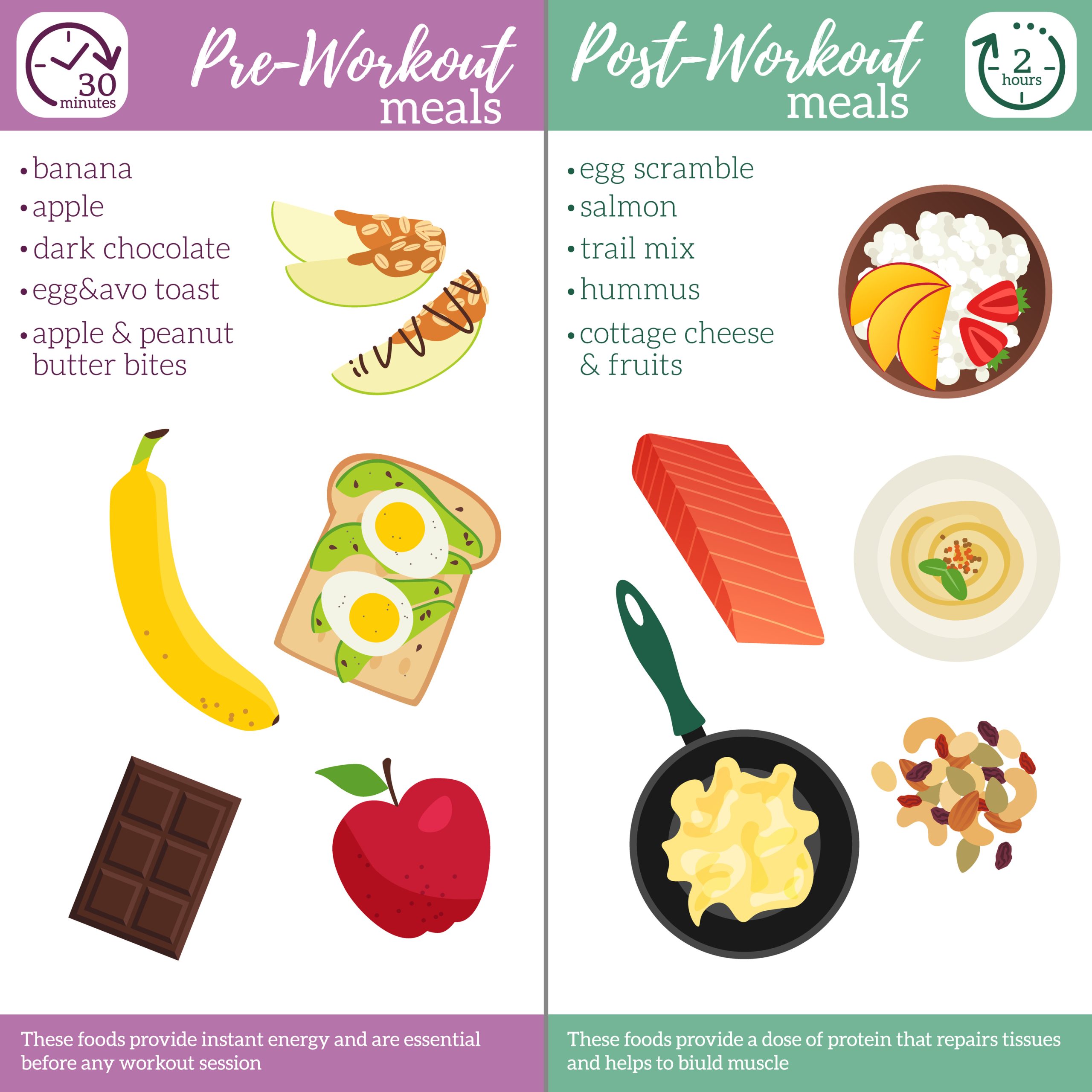
Getting your nutrition right around your workouts is key to performing at your best and recovering properly. The foods you choose to fuel with and refuel with impact energy levels, muscle repair, hydration, and more. Follow these pre and post-workout nutrition guidelines.
Pre-Workout Nutrition
Aim to eat a complete meal containing quality carbs, protein, and fats 2-3 hours before exercising. Some specifics:
- Carbohydrates – Prioritize low glycemic index carbs that break down slowly keeping energy steady. Good choices include:
- Oats
- Whole grain pasta/bread
- Quinoa
- Sweet potatoes
- Beans, lentils
- Brown rice
- Fruits like apples, berries
- Protein – Incorporate a moderate protein source which helps maintain and build muscle tissue. Select:
- Eggs
- Greek yogurt
- Cottage cheese
- Nut butter
- Fish
- Chicken
- Tofu
- Fats – Incorporate mostly anti-inflammatory fats with some meals for sustained energy, usually from foods like avocado, nut butter, olive oil, salmon.
- Hydration – Drink 16-20 oz water in the 1-2 hours pre-workout. Proper hydration impacts performance and recovery.
Examples of balanced pre-workout meals:
- Bowl of oats topped with peanut butter, banana, cinnamon
- Veggie scramble with whole grain toast
- Quinoa power bowl with salmon
- Greek yogurt parfait with granola and mixed berries
If only 1 hour or less remains before your workout, opt for a small snack approximately 100-300 calories instead of a full meal to allow for easier digestion. Smart choices include:
- Fresh or dried fruit like an apple or dates
- Rice cakes with nut butter
- Low-fat Greek yogurt
- Cottage cheese and fruit
- Trail mix/granola bar
- Peanut butter and banana sandwich
- Protein shake
Post-Workout Nutrition
Refueling properly in the 30-60 minutes after training is vital for recovery. Focus on a mix of quick digesting carbs to replenish glycogen stores and fast-absorbing proteins to repair damaged muscle fibers.
Carbohydrates
After glycogen depleted exercise, quickly digested carbs help:
- Restore muscle glycogen ● Improve protein synthesis ● Rehydrate better than water alone
Aim for approximately 0.5-1g carbs per lb body weight in the initial refeeding meal/shake. Sources of fast digesting carbs include:
- Fruit like bananas, pineapple, berries
- White rice
- White potato
- Sweet potato
- Pasta
- Oats
- Quinoa
- Corn
- 100% juice
- Sports drinks
Protein
Consuming 20-40g protein in close proximity to weight training helps stimulate muscle protein synthesis (MPS). Whey protein makes an ideal post-workout choice due to its rapid digestion. Other good options include:
- Egg whites ● Greek yogurt
● Skim milk ● Cottage cheese ● Chicken or turkey breast ● Tofu ● Lean red meat like sirloin
Combine your protein selection with quick carbs in a meal or shake. Some examples:
- Protein shake with banana and berries ● Greek yogurt parfait with granola and honey ● Eggs and toast
● Burrito bowl with chicken, brown rice, black beans ● Sirloin steak and sweet potato
Continue to eat protein-rich meals throughout the day to promote ongoing muscle repair and adaptation.
Hydration
Rehydrating is key post-exercise. Focus on:
- Water – Aim to replenish over 150% of sweat losses in the hours post-workout.
● Sports drinks – These contain electrolytes like sodium and potassium which may help rehydration. ● Tart cherry juice – Shown to reduce muscle damage when consumed for a few days post-exercise.
Other Recovery Support Supplements
Some supplements offer additional perks:
- Whey protein – Stimulates MPS and muscle repair.
- Casein protein – Slow digesting protein that prolongs the muscle building response.
- Creatine – Supports quicker strength gains and muscle growth plus improves high intensity performance.
- Omega-3s or fish oil – Helps reduce inflammation and delayed onset muscle soreness (DOMS).
The most important factors post-workout are properly refueling and staying hydrated, but supplements can provide that extra edge.
References:
- Thomas, D. T., Erdman, K. A., & Burke, L. M. (2016). Position of the Academy of Nutrition and Dietetics, Dietitians of Canada, and the American College of Sports Medicine: Nutrition and Athletic Performance. Journal of the Academy of Nutrition and Dietetics, 116(3), 501–528. https://doi.org/10.1016/j.jand.2015.12.006
- Kerksick, C.M., Arent, S., Schoenfeld, B.J. et al. International society of sports nutrition position stand: nutrient timing. J Int Soc Sports Nutr 14, 33 (2017). https://doi.org/10.1186/s12970-017-0189-4
- Pasiakos SM, Lieberman HR, McLellan TM. Effects of Protein Supplements on Muscle Damage, Soreness and Recovery of Muscle Function and Physical Performance: A Systematic Review. Sports Med. 2014;44(5):655-670. doi:10.1007/s40279-013-0137-7
