

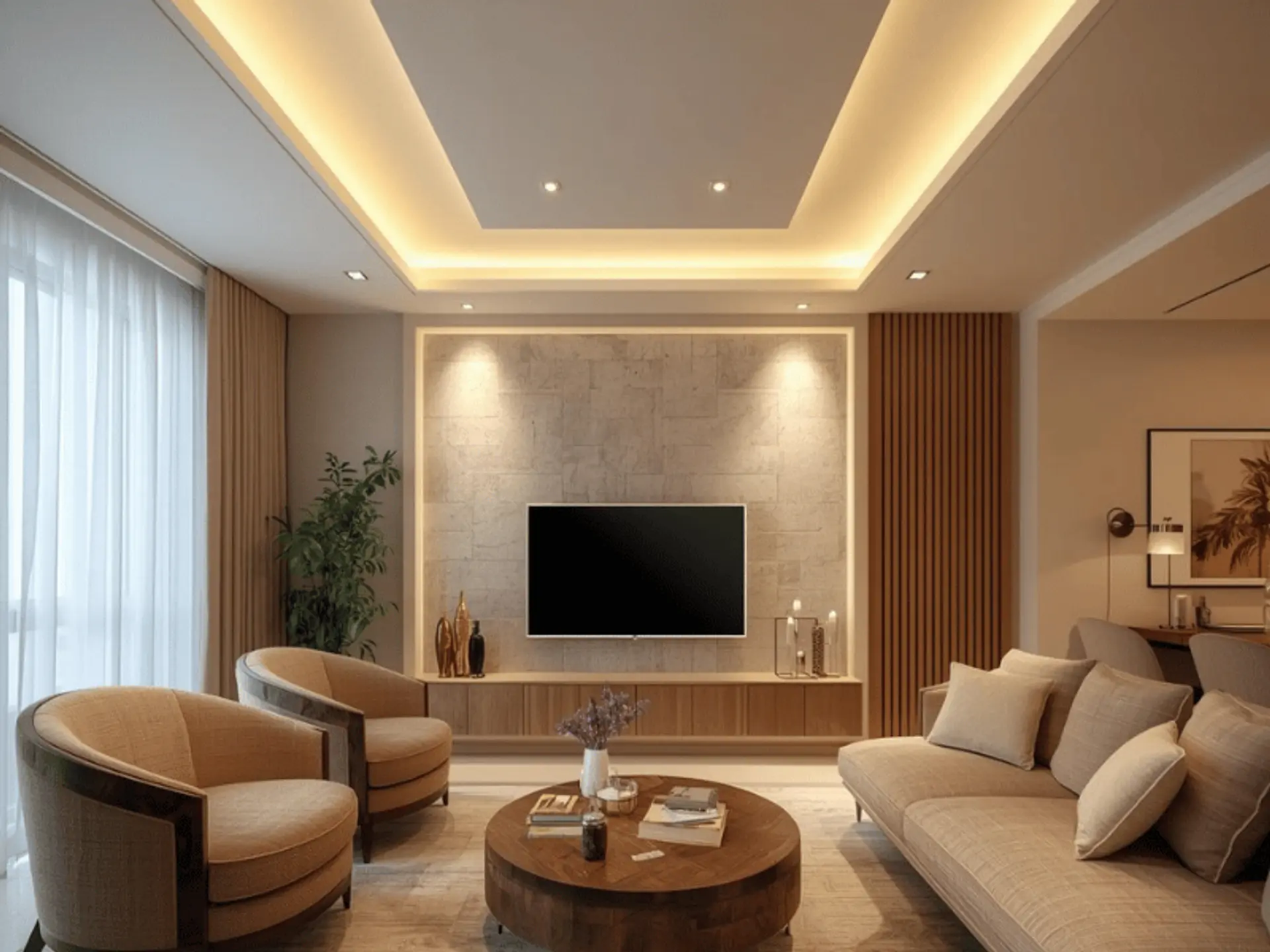
Most people spend plenty of time choosing wall colours and furniture, then default to plain white for the ceiling. While white is often a sound choice, it is not the only one, and understanding how colour behaves overhead can help you create rooms that feel deliberate rather than accidental. The ceiling covers as much area as the floor, so its colour has a surprisingly strong influence on atmosphere.
The Case for White and Off-White
White ceilings reflect the most light, which makes rooms feel brighter and taller. They are especially useful in spaces with limited daylight or low height. Different whites carry different undertones, though. A cool white can feel crisp and modern, while a warm ivory feels softer and more inviting. Test samples in your own room, since daylight and artificial lighting change how each tone appears across the day.
Using Colour for Cosiness
Darker or richer ceiling colours can create intimacy, particularly in rooms with generous height. Deep blue, charcoal, or earthy terracotta can make a large lounge or dining room feel wrapped and snug, especially when paired with warm lighting. This approach demands care. Dark ceilings absorb light, so you need more illumination and well-planned fixtures. They also highlight imperfections, so a smooth, professionally finished surface is essential.
Matching the Ceiling to the Walls
Painting the ceiling in the same colour as the walls, sometimes called colour drenching, blurs the boundaries of the room and gives a contemporary, enveloping feel. It can work well in bedrooms and studies. For a gentler version, use the wall colour at a lighter tint on the ceiling. This keeps the harmony while preserving brightness.
Colour and Mood
Soft blues and greens are associated with calm and are popular in bedrooms and relaxation spaces. Warm neutrals promote comfort and sociability, which suits living and dining areas. Bright, saturated colours can energise creative rooms or children’s play areas but may become tiring in spaces meant for rest. Think about how you want to feel in each room, and let that guide the palette.
Working With False Ceiling Layers
Multi-level ceilings give you more opportunities to play with colour. A recessed panel in a deeper shade can add depth, while a lighter outer border keeps the room open. Cove lighting changes how colour appears, since warm light adds golden tones and cooler light makes colours look crisper. Always test paint under the actual light you plan to use.
Finish Matters Too
Matte paint is the usual recommendation for ceilings because it softens reflections and conceals minor flaws. Satin or low-sheen finishes are suitable for kitchens and bathrooms where cleaning is needed. Glossy ceilings are rare in homes, but a controlled amount of sheen can add glamour in a formal dining room or entrance.
As you plan, look at examples of false ceiling colour combinations to see how designers pair paint shades with lighting and wall colours. It also helps to compare different ceiling colours and finishes in context, so that you can see how they interact with furniture and flooring.
Remember that lighting changes the story as the day progresses. A ceiling painted in a pale shade may look cool and crisp at noon but glow golden in the evening under warm lamps. Take paint swatches, tape them to the ceiling, and observe them at different hours before you decide on the final shade.
Colour is one of the least expensive ways to transform a room. By giving your ceiling the same attention you give your walls, you can create spaces that look more complete and feel more comfortable.
