


Map of Florida Panhandle reveals a stretch of coastline known for its white-sand beaches, emerald waters, and small-town charm. The Florida Panhandle is a narrow strip of land located in the northwestern region of Florida. Stretching roughly 200 miles from the Alabama border to the Apalachicola River, this region is known for its mix of historic towns, beautiful beaches, and natural landscapes.
A map of the Florida Panhandle is essential for understanding its geographic diversity and the connectivity between its cities, coastlines, and nature reserves. With the Gulf of Mexico to the south and Alabama and Georgia to the north, the Panhandle offers a unique blend of Southern charm and coastal beauty.
The map helps identify major highways, local routes, and popular destinations like Pensacola, Destin, and Panama City. It’s also a valuable tool for travelers, students, and locals who want to explore scenic drives, beach areas, and forested parks throughout this historically rich and naturally vibrant region.
Understanding the Geography of the Florida Panhandle
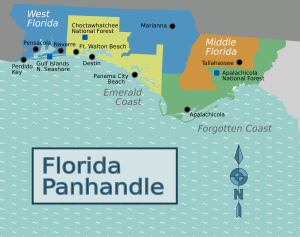
Key Geographic Features:
- The Panhandle is bordered by Alabama (northwest) and Georgia (northeast).
- The Gulf of Mexico lines the southern edge, offering over 200 miles of coastline.
- The Apalachicola River marks the eastern boundary of the region.
Landforms and Terrain:
- Flat coastal plains dominate much of the southern part, especially near the Gulf.
- Rolling hills and pine forests are common in the inland north.
- Wetlands and estuaries flourish near bays and river mouths.
Geographic Significance:
- The region serves as a transition zone between subtropical coastal Florida and southern inland U.S. environments.
- The Panhandle is subject to tropical storms and hurricanes, especially in the summer and fall.
- Major river systems like the Choctawhatchee and Escambia Rivers influence both the natural ecosystem and human settlement.
This varied geography plays a major role in the Panhandle’s identity, shaping its weather patterns, development, and ecological diversity.
Major Cities Featured on the Florida Panhandle Map
Table of Major Cities in the Panhandle:
| City | County | Known For |
| Pensacola | Escambia | Naval Air Station, historic downtown |
| Tallahassee | Leon | Florida state capital, universities |
| Panama City | Bay | Beach tourism, coastal development |
| Destin | Okaloosa | White-sand beaches, fishing |
| Fort Walton Beach | Okaloosa | Military bases, family-friendly beaches |
| Marianna | Jackson | Caves, historic sites |
City Highlights:
- Pensacola offers a strong military presence and colonial history.
- Tallahassee, as the state capital, features government buildings, Florida State University, and FAMU.
- Panama City and Destin are major vacation spots with thriving beach tourism.
- Inland cities like Marianna offer a more rural experience with caves and springs.
These cities are all clearly marked on most Florida Panhandle maps, helping users understand the urban layout and travel routes across the region.
Popular Tourist Destinations in the Florida Panhandle
Must-Visit Tourist Spots:
- Destin: Known for its emerald waters and dubbed the “World’s Luckiest Fishing Village.”
- Panama City Beach: Offers lively beach resorts, theme parks, and nightlife.
- Pensacola Beach: Famous for its sugar-white sands and vibrant boardwalk.
- Tallahassee: Rich in cultural history, museums, and government landmarks.
- Seaside: A charming planned town with pastel cottages and bike paths.
- Navarre Beach: A quieter location, ideal for peaceful getaways and families.
Tourist Activities:
- Beachgoing and water sports along the Gulf.
- Exploring state parks, including hiking, kayaking, and wildlife spotting.
- Touring historical sites such as forts and lighthouses.
- Participating in local festivals, especially seafood and music events.
The Florida Panhandle’s diverse attractions are easy to locate on a detailed regional map, helping visitors plan memorable road trips and beach vacations.
Highways and Routes Shown on the Florida Panhandle Map

Major Highways:
- Interstate 10 (I-10): The primary east-west highway, stretching across the entire Panhandle.
- U.S. Highway 98: Runs along the coast, linking beach towns like Pensacola, Destin, and Panama City.
- U.S. Highway 231: Connects the Panhandle with central Alabama and beyond.
- State Road 20: Crosses the interior of the Panhandle, linking smaller towns.
Map Insights:
- These routes are vital for commuting, shipping, and tourism.
- I-10 is often used for cross-country travel and connects the Panhandle to Jacksonville and New Orleans.
- Highway 98 is the best route for coastal exploration, with scenic views and beach access.
Travel Tip:
Maps help highlight rest areas, toll roads, and exits, making navigation smoother and safer.
Understanding the layout of these highways is essential for planning road trips and for those exploring the area’s blend of urban hubs and remote retreats.
Beaches and Coastal Areas on the Panhandle Map
Top Beaches in the Panhandle:
- Pensacola Beach: Offers both family-friendly and secluded spots.
- Navarre Beach: Less crowded, perfect for quiet relaxation.
- Grayton Beach State Park: Combines nature with beautiful shoreline.
- Panama City Beach: Popular for spring breaks and beach sports.
- Fort Walton Beach: Ideal for family trips and gentle surf.
- Santa Rosa Beach: Known for its upscale rentals and peaceful vibe.
Coastal Features to Note on the Map:
- Barrier islands that protect the mainland, like Santa Rosa Island.
- Inlets, bays, and estuaries shown in blue shades on detailed maps.
- Areas like St. George Island and Cape San Blas also attract tourists for their natural beauty.
Maps of the Panhandle clearly mark public beach access points, coastal campgrounds, and fishing piers, helping travelers navigate the coastline with ease and enjoy everything the Emerald Coast has to offer.
Natural Parks and Forests Mapped in the Region
Major Natural Parks:
- Topsail Hill Preserve State Park
- Grayton Beach State Park
- St. Andrews State Park
- Blackwater River State Park
- Falling Waters State Park
Protected Forests:
- Apalachicola National Forest (largest in Florida)
- Blackwater River State Forest
- Tate’s Hell State Forest
What the Map Shows:
- Most maps detail hiking trails, rivers, lakes, and campgrounds.
- Park boundaries are clearly marked, often in green, to signify public lands.
- Roads and access points to these parks are labeled to aid outdoor enthusiasts.
These natural areas are essential for conservation and recreation, offering opportunities for kayaking, wildlife watching, camping, and more. Whether you’re a nature lover or just looking for peaceful scenery, these parks and forests provide a wonderful contrast to the coastal buzz.
County Boundaries and Divisions in the Florida Panhandle
The Florida Panhandle consists of several counties that shape the region’s cultural and administrative identity. There are 16 counties generally considered part of the Panhandle. These include Escambia, Santa Rosa, Okaloosa, Walton, Bay, Gulf, Franklin, Wakulla, Leon, Liberty, Calhoun, Jackson, Washington, Holmes, Gadsden, and Jefferson. Each county has its own government, school district, and local services.
Table of Selected Counties and County Seats:
| County | County Seat | Notable Feature |
| Escambia | Pensacola | Westernmost county, major Navy base |
| Leon | Tallahassee | State capital, government hub |
| Bay | Panama City | Popular beach tourism area |
| Walton | DeFuniak Springs | Scenic lakes, small-town charm |
| Franklin | Apalachicola | Fishing villages, oysters, coastal charm |
Maps of the Panhandle clearly define county borders using bold lines or color-coded regions. This helps users distinguish jurisdictions, understand voting districts, and plan localized travel or emergency routes effectively.
Historic Sites Identified on the Panhandle Map
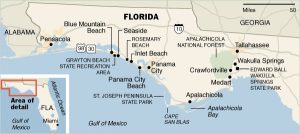
The Florida Panhandle holds a deep and layered history, much of which is visible through mapped historic landmarks. From pre-colonial Native American sites to Spanish forts and Civil War battlefields, maps of this region often highlight spots of cultural and historical importance.
Notable Historic Sites to Find on Maps:
- Fort Pickens (Pensacola): A 19th-century fort used through multiple U.S. conflicts.
- Mission San Luis (Tallahassee): A preserved Spanish mission site and museum.
- St. Michael’s Cemetery: One of Florida’s oldest cemeteries in Pensacola.
- Marianna Civil War Battlefield: Site of a lesser-known but significant 1864 battle.
- Apalachicola Historic District: Preserves 19th-century architecture and maritime history.
Maps often denote these sites with special icons or heritage markers. They are important for education, tourism, and heritage conservation, allowing residents and visitors alike to appreciate the Panhandle’s rich past while navigating its modern layout.
Using a Map for Travel and Navigation in the Panhandle
Maps of the Florida Panhandle are essential tools for both local and long-distance travel. Whether digital or printed, they help users understand routes, landmarks, and terrain. Major highways such as I-10, US-98, and State Road 20 are clearly marked, with towns, rest areas, gas stations, and state borders all identifiable.
Navigation Tips Using the Map:
- Use color-coded roads to distinguish between interstates and local routes.
- Note mile markers and exit numbers along major highways.
- Find symbols for tourist attractions, hospitals, and public beaches.
- Look for natural hazards, such as flood zones and hurricane evacuation routes.
Example Travel Planning:
A traveler from Pensacola to Tallahassee can chart a straight eastbound route along I-10, with optional scenic detours via Highway 98 for beach views.
Using a detailed Panhandle map ensures a safe, efficient, and scenic trip, offering both direction and exploration opportunities along the way.
Digital vs. Physical Maps of the Florida Panhandle
Both digital and physical maps have distinct advantages when exploring the Florida Panhandle. Choosing the right one depends on the traveler’s needs, whether they require real-time GPS data or a broader overview of the region.
Comparison Table:
| Feature | Digital Maps | Physical Maps |
| Navigation | Turn-by-turn GPS, traffic updates | Good for route planning |
| Battery Use | Requires power | No battery required |
| Offline Use | Limited unless downloaded | Always accessible |
| Detail & Zoom | Highly detailed, searchable | Great for big-picture perspectives |
| Durability | Susceptible to screen damage | Can be water-resistant or foldable |
Digital maps are excellent for on-the-go navigation, while physical maps are helpful for overview planning, education, and emergencies. Many travelers carry both types, especially in rural areas with limited cell service.
Using both formats in tandem ensures a well-prepared trip, covering modern tech convenience and classic map reliability.
Frequently Asked Questions About Map of Florida Panhandle
What states border the Florida Panhandle?
Alabama to the west and north, and Georgia to the northeast.
Which highway runs across the Panhandle?
Interstate 10 (I-10) is the major east-west route connecting the entire region.
Are all Gulf Coast beaches in the Panhandle?
No, but the Panhandle contains many of Florida’s best Gulf beaches, including Destin and Pensacola Beach.
Does the Panhandle include Tallahassee?
Yes, Tallahassee, the state capital, is located in the eastern Panhandle.
Can I use maps to locate state parks?
Absolutely. Most detailed maps show parks, forests, hiking trails, and campgrounds.
Are there any National Forests in the Panhandle?
Yes. Apalachicola National Forest is the largest, located south of Tallahassee.
Do printed maps show evacuation zones?
Some printed maps do, especially emergency preparedness editions available in local offices.
These questions highlight the practical use and value of a well-detailed map when exploring or residing in the Florida Panhandle.
Conclusion on Exploring the Map of Florida Panhandle
Exploring the Florida Panhandle through a detailed map offers a unique and enriching experience. From the historic charm of Pensacola to the governmental pulse of Tallahassee, maps provide a window into this diverse and captivating region. Whether you’re tracing county lines, mapping out a beach trip, or uncovering the Panhandle’s forested heartland, understanding how to read and use a map of this region is essential.
With major routes like I-10, scenic byways such as US-98, and plenty of marked parks and coastal treasures, travelers and residents alike benefit from visual guidance. The Panhandle’s rich blend of natural beauty, culture, and history makes it a destination worth exploring. Using both digital and traditional maps ensures a comprehensive understanding and enhances every journey through Florida’s northwestern gem.
