


In the vibrant tapestry of Japanese culture, the Hanten emerges as a distinctive thread, weaving together tradition, craftsmanship, and style. Rooted in centuries of history, this garment transcends the boundaries of mere clothing, embodying a cultural emblem that resonates with elegance and significance. As we embark on a journey to explore the nuances of the Japanese Hanten, envision a piece of attire that transcends fashion to become a living testament to the nation’s rich heritage.
Steeped in tradition, the Hanten’s origins trace back through the annals of time, bearing witness to a fascinating evolution that reflects the ever-changing landscape of Japanese society. Beyond its aesthetic appeal, this garment encapsulates stories of rituals, ceremonies, and the skilled hands that meticulously craft each piece. Join us in unraveling the layers of this iconic attire, discovering how it seamlessly blends the past with the present, leaving an indelible mark on the global stage. The Japanese Hanten beckons—a sartorial journey that promises a deeper understanding of culture, craftsmanship, and enduring style.
Historical Background of Japanese Hanten
The Japanese Hanten, a garment entrenched in history, invites us to traverse the corridors of time, offering a glimpse into its intriguing origins. With roots dating back to the Edo period (1603–1868), the Hanten initially emerged as a pragmatic piece worn by firefighters to protect against the biting cold during their perilous duties. Over time, it evolved from a functional necessity into a cultural symbol, weaving itself into the fabric of Japanese life.
During the Meiji era (1868–1912), the Hanten underwent a transformation, transcending its utilitarian beginnings to embrace the broader spectrum of Japanese society. Its popularity expanded beyond the confines of firefighters, reaching everyday citizens and becoming synonymous with communal identity. The garment’s designs began to reflect regional variations, echoing the diverse cultural landscapes of Japan.
The mid-20th century witnessed another pivotal chapter as the Hanten gained recognition beyond domestic borders. It became emblematic of Japanese craftsmanship, admired for its durability, intricate detailing, and timeless appeal. Today, the Hanten stands as a living testament to the resilience of tradition, weathering the tides of change while retaining its cultural essence. As we delve deeper into its historical tapestry, we unravel not only the evolution of a garment but also the chronicles of a nation’s rich heritage woven into every stitch.
Japanese Hanten; Design and Features
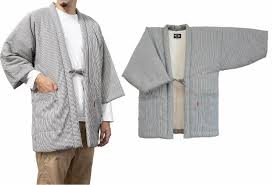
The allure of the Japanese Hanten lies not only in its historical roots but also in the meticulous design elements that make it a wearable work of art. Characterized by a short, quilted jacket structure, the Hanten boasts a distinctive silhouette that has become synonymous with comfort and versatility. Crafted with precision, its design harmonizes functionality with aesthetic appeal.
The fabric selection plays a crucial role in defining the Hanten’s character. Traditional versions often feature sturdy materials like cotton or hemp, chosen for their durability and ability to withstand the rigors of daily life. Vibrant colors and intricate patterns adorn the garment, each motif carrying symbolic significance. Dragons, cherry blossoms, and geometric shapes often grace the Hanten, echoing cultural motifs that connect wearers to Japan’s rich heritage.
One of the defining features of the Hanten is its reversible nature, showcasing contrasting designs on the inner and outer layers. This dual-sided aspect not only enhances the garment’s adaptability but also allows wearers to express different facets of their personality.
The closure system, typically featuring ties or buttons, adds a functional yet decorative element. The collar, wide and warm, provides an additional layer of protection against the elements. Some variations may include practical pockets, further underscoring the Hanten’s blend of form and function.
As contemporary designers explore innovative interpretations, the traditional features of the Hanten continue to evolve. The garment’s adaptability to various styles and occasions remains a testament to its timeless design, capturing the essence of Japanese craftsmanship and sartorial sophistication. Whether worn casually or on formal occasions, the Japanese Hanten stands as a wearable canvas, where history, culture, and style converge in every carefully curated detail.
Japanese Hanten; Symbolism and Cultural Significance
Beyond its aesthetic appeal, the Japanese Hanten is a canvas imbued with profound symbolism, weaving a narrative that extends beyond mere threads and fabric. Each motif, color, and stitch carries layers of cultural significance, creating a tapestry of meaning that connects wearers to Japan’s rich heritage.
Motifs embroidered on the Hanten often serve as visual storytellers. Dragons symbolize power and protection, while cherry blossoms evoke notions of beauty and transience. Geometric patterns may convey familial or regional ties, fostering a sense of belonging and continuity. In this way, the Hanten becomes a wearable chronicle, expressing the wearer’s identity and cultural roots.
The act of donning a Hanten also carries ritualistic undertones. In certain ceremonies and festivals, wearing a Hanten is a way of paying homage to tradition and ancestors, creating a tangible link between the past and the present. It is not merely a garment but a vessel through which cultural practices are preserved and passed down through generations.
Furthermore, the Hanten serves as a symbol of community. When crafted for a specific purpose or event, it fosters a sense of unity among wearers, creating a visual harmony that transcends individual expressions. Whether worn during celebrations, religious ceremonies, or family gatherings, the Hanten becomes a shared emblem, reinforcing the collective identity of a group.
As the Hanten continues to evolve in contemporary fashion, its timeless symbolism persists, ensuring that each garment remains a repository of cultural narratives, connecting wearers to the profound legacy of Japan’s traditions.
Japanese Hanten; Craftsmanship and Production
The creation of a Japanese Hanten is an intricate dance between tradition and craftsmanship, where skilled artisans breathe life into every thread. Rooted in time-honored techniques, the production process involves a meticulous blend of handcrafting and machine precision.
Artisans, often following age-old methods passed down through generations, embark on the labor-intensive journey of selecting, cutting, and stitching fabric. The quilting process, a hallmark of Hanten construction, requires a deft hand to ensure both durability and insulation. The embroidery of intricate motifs demands precision, with artisans infusing each stitch with cultural significance and personal touch.
Regional nuances further contribute to the diversity of Hanten production. Different locales may boast specific techniques or materials unique to their heritage, showcasing the rich tapestry of Japan’s artisanal landscape.
In an era of mass production, the Japanese Hanten remains a testament to the enduring commitment to craftsmanship. Each garment represents not just a piece of clothing but a masterpiece, echoing the dedication of artisans who preserve the legacy of their craft in every meticulously crafted Hanten.
Japanese Hanten; Modern Adaptations and Fashion Trends
In the dynamic realm of fashion, the Japanese Hanten has gracefully embraced modernity, becoming a canvas for innovation and expression. Top Designers of Hanten, like Japanese Masks, have seamlessly integrated the Hanten into contemporary wardrobes. From runway showcases to streetwear ensembles, the Hanten has found a place in diverse style realms. Bold reinterpretations, experimentation with fabrics, and fusion with global fashion trends have propelled the Hanten into the forefront of sartorial evolution. As the garment continues to captivate new audiences, its adaptability ensures it remains both a symbol of tradition and a muse for cutting-edge fashion enthusiasts.
The Global Embrace of the Japanese Hanten
The Japanese Hanten has transcended its cultural roots to captivate a worldwide audience. Its popularity extends far beyond Japan’s borders, resonating with fashion enthusiasts, celebrities, and designers globally. Embraced for its unique blend of tradition and style, the Hanten has graced international runways and adorned the shoulders of trendsetters. Its influence on global fashion underscores a growing appreciation for cultural authenticity, as the Hanten continues to weave itself into the fabric of diverse wardrobes, becoming a symbol not just of Japanese heritage, but of a universal appreciation for timeless elegance.
Wearing the Hanten: Styling Tips for Effortless Elegance
Embrace the timeless allure of the Japanese Hanten with these styling tips. For a casual look, pair it with jeans or leggings, letting the vibrant patterns take center stage. Elevate your ensemble by cinching the waist with a belt for a tailored silhouette. Embrace versatility by wearing it over a dress for a contemporary fusion of styles. For formal occasions, opt for a solid-colored Hanten and pair it with tailored trousers or a skirt. Experiment with accessories like traditional Japanese footwear or contemporary jewelry to add a personalized touch. With its adaptability, the Hanten seamlessly transitions from everyday wear to statement fashion.
Conclusion
In the delicate stitches of the Japanese Hanten lies a tapestry of tradition, craftsmanship, and style. From its humble origins to global recognition, the Hanten’s journey reflects the enduring allure of Japan’s cultural heritage. As we conclude, the Hanten stands not just as a garment but as a living testament to the timeless elegance woven into the very fabric of Japanese history.
