

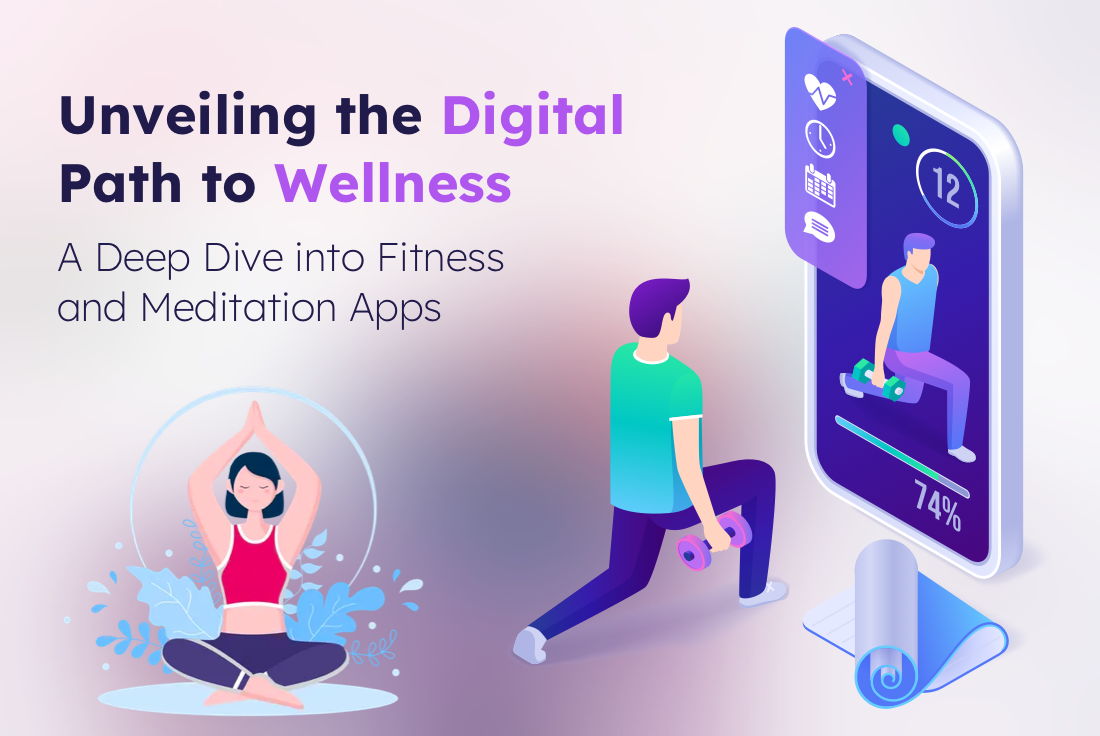
We all are aware of how taking care of physical and mental well-being is of utmost importance since it significantly impacts one’s quality of life. People have become more focused on adopting healthier lifestyles, and here fitness apps and meditation apps are playing a vital role in supporting their wellness journeys. A report by Statista predicts that the revenue of the fitness app industry will grow annually at a rate of 14.96% between 2023 and 2028, projecting a value of US$ 04 billion by 2028. Entrepreneurs are investing their financial resources to innovate solutions that cater to the increasing demand for fitness and mindfulness practices, considering the growing popularity of apps. In order to create a fitness or meditation app, one requires the proper guidance of experienced professionals in the app development field. With a clear understanding of fitness apps, you will have better clarity of your objectives while learning how to create a fitness app that aligns with your goals. Well, keep reading, as here in this blog, we will understand the role of fitness apps and meditation apps in enhancing our overall health.
What are Fitness Apps?
Fitness apps are software programs that are focused on enhancing our physical well-being. These apps include a set of features that will help you lead towards better health, improved fitness levels, and a more active lifestyle, helping you achieve your fitness goals. From strength training to diet, exercises, etc., these apps cover a wide range of fitness topics. Even in current times, new and new fitness app ideas keep emerging for entrepreneurs to get inspired and build solutions around them. The main purpose of building a fitness app is to guide users with a set of pre-recorded or live demos for proper workout techniques and nutritional practices. Fitness apps are of various types, and each of them focuses on a special aspect of user health and wellness. Some of the types of business apps are as follows.
-
Personal Training Apps
Personal training apps in Fitness apps are software or applications that are designed to provide personal fitness guidance, workouts, and training plans to users. The apps will give users the experience of having a personal trainer who offers guidance based on fitness goals.
-
Diet and Nutrition App
The diet and nutrition app assists users in managing their dietary habits and nutritional intake. App users can get access to customized diet plans by just setting their fitness goals and meal options. This way, app users can make informed decisions regarding their food and drink consumption.
-
Wellness Trackers
Wellness tracker apps are designed to help individuals track crucial health-related insights. Users can monitor and record their daily steps covered, calorie consumption, sleep tracking, heartbeat, blood pressure, and other relevant health-related metrics to gain deeper insights into their overall health status.
-
Dedicated Workout Apps
Dedicated workout apps are apps focused on features that assist users in planning, tracking, and optimizing their fitness routines. Users are provided access to videos and tutorials that are related to training specific body parts according to specific goals and preferences.
Now that we’ve covered tech solutions focusing on physical well-being let’s move towards the ones that help us improve our mental health.
Meditation Apps
Meditation Apps are digital software solutions that emphasize providing relaxation and reducing stress, thereby leading to the improvement of your overall mental health. Whether you’re worried about a crisis that is out of your control or just need to clear your head, meditation may be a solid place to start a Meditation app. From guided meditations to listening to soothing music and concentrated meditation, a meditation app is the truest companion that takes care of mental health. If you’re wondering how to create a meditation app that stands out among other mindfulness apps, give high importance to crucial features like guided meditations, soothing music, and focused meditation sessions. However, one should note that in most cases, there are dedicated meditation apps that are based on important features that focus on individual preferences and goals. Let’s understand some of the crucial types of meditation apps:
-
Guided Meditation Apps
Guided Meditation Apps are digital solutions that help users practice meditation under the guidance of an audio or visual instructor. These apps provide structured and narrated meditation experiences to users, where a teacher or instructor will guide you through the entire meditation process. The instructor provides you with instructions regarding breathing techniques, visualization, mindfulness, and other meditation practices.
-
Mindfulness Timer Apps
As the name suggests, Mindfulness timer apps are solutions that tend to assist individuals in practicing mindfulness meditation. The app includes customizable timers that allow users to set a specific duration of time they want to practice meditation without needing to check their phones or clocks to know the duration. This way, users can put their utmost focus when they’re meditating without worrying about the passage of time.
-
Binaural Beats Meditation Apps
Binaural beats meditation apps are apps that incorporate binaural beats which are used for enhancing meditation practices. These beats are known to induce relaxation, increase focus, or alter the state of consciousness in the mind of the person listening to them. Notably, these apps accompany meditation sessions with binaural beats to promote a deeper and more immersive meditation experience.
-
Interactive Meditation Apps
Interactive meditation apps are the apps that make a user’s mindfulness journey exciting through engaging meditation practices. These apps are packed with insightful features that include guided visualizations, responsive breathing exercises, real-time feedback on meditation progress, and interactive elements that enhance the user’s meditation experience.
-
Virtual Reality (VR) Meditation Apps
VR Meditation Apps have introduced an innovative way of meditation that includes the use of VR technology, which allows users to have a unique and deeply immersive meditation experience. By leveraging VR headsets, these apps enhance the meditation experience by creating a simulated environment that feels real. This transports users to tranquil and serene settings, such as a peaceful beach, a lush forest, or a mountain peak.
So here we completed our blog where we discussed the role of fitness apps and meditation apps in enhancing our overall health.
What are your thoughts after reading this blog? Are you willing to invest in the opportunity to build innovative fitness and meditation apps?
Let us know what you think in the comments below, as we would love to hear from you!
