

Introduction
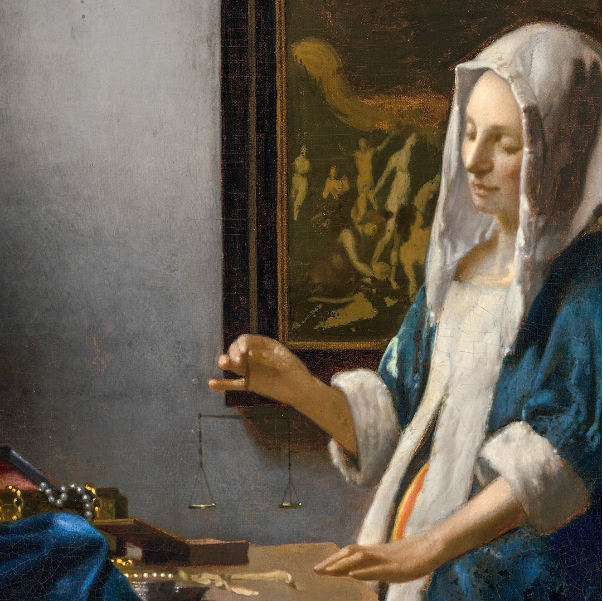
In the serene world of Johannes Vermeer’s “Woman with a Water Pitcher”, we find a mesmerizing blend of tranquility and beauty. This work, emblematic of Vermeer’s mastery, captures a moment of quiet contemplation. This article aims to delve into the quietude and subtlety of “Woman with a Water Pitcher”, exploring the elements that make this painting a captivating piece in the realm of art.
Vermeer, a master of the Dutch Golden Age, is renowned for his depictions of ordinary scenes filled with extraordinary grace and light. “Woman with a Water Pitcher” stands as a testament to his ability to transform everyday moments into scenes of profound calm and beauty. The painting invites viewers to pause and reflect, drawing them into a moment captured in time.
Vermeer’s Artistic Background
Johannes Vermeer’s paintings are a window into the 17th-century Dutch life, characterized by their attention to detail and a remarkable use of light. His works often depict indoor scenes, portraying the simple yet elegant life of the Dutch middle class. In “Woman with a Water Pitcher”, Vermeer continues this theme, presenting a scene that is both intimate and universal.
The painting is set in a well-lit interior, a common setting for Vermeer, and focuses on a woman standing by a window. The use of light in this painting is particularly notable – it filters through the window, illuminating the woman and the objects around her, creating a sense of warmth and clarity. This treatment of light is one of Vermeer’s signatures, allowing him to highlight the textures and colors in the scene.
Detail and Composition in ‘Woman with a Water Pitcher’
In “Woman with a Water Pitcher”, the composition is both simple and intricate. The woman stands off-center, creating a balanced and harmonious scene. Her pose and the direction of her gaze suggest a moment of introspection or pause, inviting viewers to ponder her thoughts.
The details in the painting – from the luxurious fabrics to the reflective surfaces of the water pitcher and the basin – are rendered with meticulous care. Vermeer’s ability to capture different textures – the softness of the woman’s clothing, the transparency of the water, and the sheen of the metal – showcases his technical skill. The overall effect is one of calm and elegance, a characteristic that defines much of Vermeer’s work.
Light and Shadow in ‘Woman with a Water Pitcher’
In “Woman with a Water Pitcher”, Johannes Vermeer’s use of light and shadow is pivotal in creating the painting’s serene atmosphere. The light streaming through the window not only illuminates the woman and the objects around her but also highlights the peacefulness of the scene. This expert manipulation of light and shadow adds depth and realism, making the scene come alive.
The way Vermeer captures the effects of light on various surfaces is remarkable. The luminosity on the woman’s face, the gleam on the pitcher, and the soft light on the walls contribute to a sense of tranquility and timelessness. This subtle interplay between light and shadow is a testament to Vermeer’s skill in portraying the quiet moments of everyday life with a sense of reverence and beauty.
Themes and Symbolism
“The Woman with a Water Pitcher” encompasses themes of tranquility, domesticity, and the beauty of the mundane. The woman’s act of pouring water is a simple, everyday activity, yet Vermeer elevates it to a moment worth capturing. This scene reflects the 17th-century Dutch values of finding beauty in the ordinary and the importance of domestic life.
Moreover, the painting is rich in symbolic elements. The water pitcher and the basin, for instance, can be interpreted as symbols of purity and cleanliness, both in a physical and possibly in a moral sense. The open window may symbolize the woman’s connection to the outside world or her inner thoughts and feelings. These symbolic elements add layers of meaning to the painting, inviting viewers to interpret the scene in various ways.
‘Woman with a Water Pitcher’ in Vermeer’s Oeuvre and Dutch Art History
“Woman with a Water Pitcher” holds a significant place in Vermeer’s oeuvre and in the broader context of Dutch art history. It exemplifies the genre of domestic interior scenes, which were popular during the Dutch Golden Age. This painting, with its focus on the quiet beauty of everyday life, reflects the cultural and artistic trends of the time.
In Dutch art history, “Woman with a Water Pitcher” is celebrated for its peacefulness, exquisite detail, and Vermeer’s masterful use of light. It represents a shift in the focus of art from religious and historical themes to more personal, intimate scenes. Vermeer’s ability to infuse ordinary scenes with a sense of significance and beauty continues to inspire and captivate viewers, making his work timeless and universally admired.
