

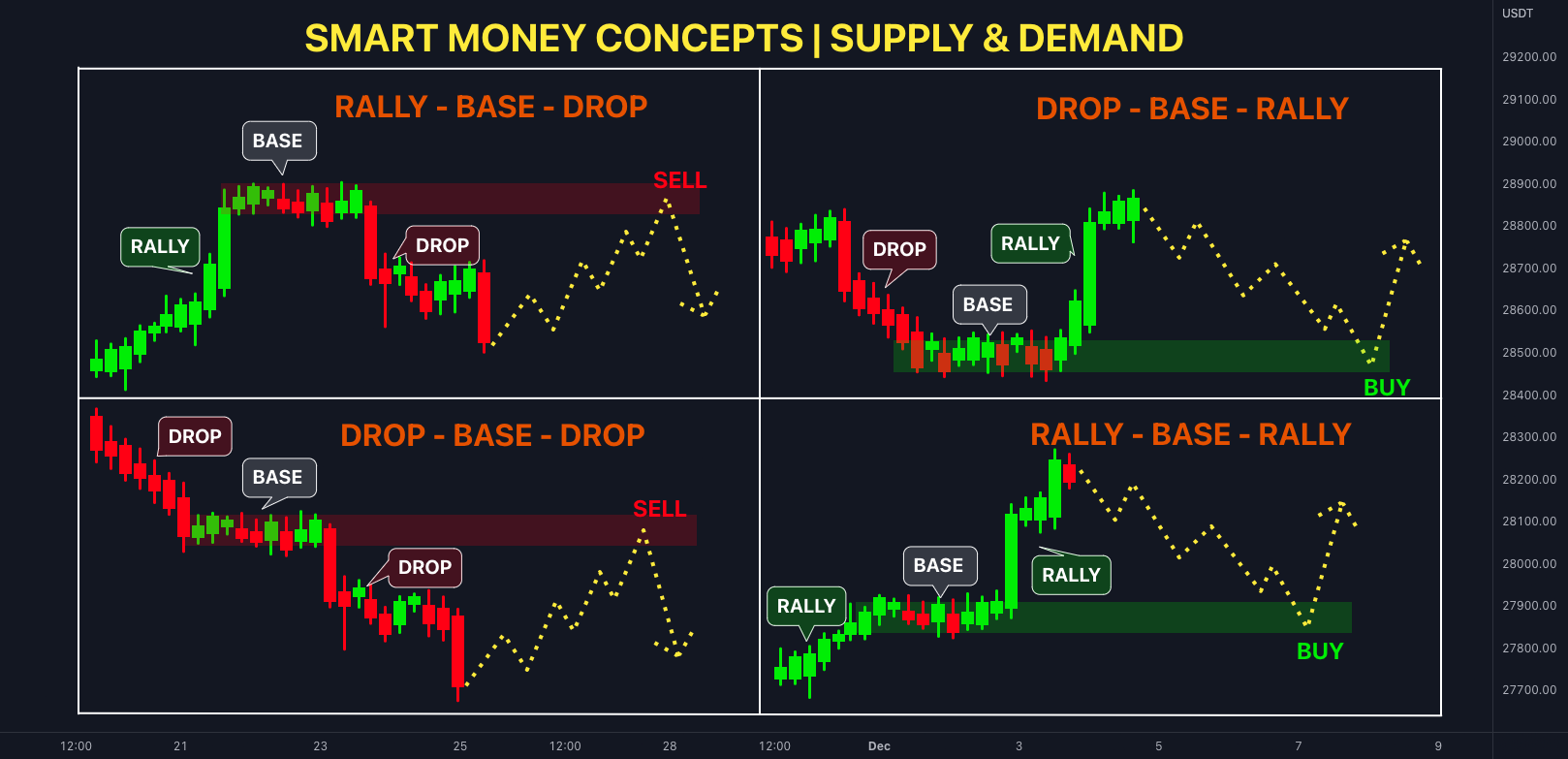
The “smart money” concept refers to working with significant amounts of money that institutional investors and hedge funds handle. They can make correct investments in financial securities due to their skill, knowledge and experience.
Even though it’s a straightforward strategy, it’s carried out effectively and widely. Identifying and following the decisions of wealthy investors has become wildly popular due to its profitability and reliability. Here’s what you need to know about this simple yet optimal strategy.
What is Smart Money?
When casino players trusted a seasoned and more battle-tested player with their money to make a bet, the idea of smart money was first developed. These were professional gamblers endowed with knowledge, connections, and expertise that the ordinary public did not possess.
In a similar vein, traders use smart-money investors, who tend to be more seasoned and have access to insider information than average traders, to execute profitable transactions in various markets.
Traders put their faith in smart money investors due to the fact that these individuals may have interests worth millions or even billions of dollars that might sway market trends in their favour.
These investors use the most careful and trustworthy methods to safeguard their investments because they have a lot more riding on the outcome.
This makes them the most probable market players to close agreements that generate a profit. Retail traders might use this data to inform the development of their trading strategy.
How to Apply This Concept in Every-Day Trading
The dynamics and structure of the market allow smaller traders to study and emulate these diligent financial actions. However, a deep comprehension of financial markets and extensive study of respective industries are needed to develop a strong sense of market sentiment.
Institutional investors execute a significant number of market positions. Consequently, when millions of dollars are being transacted simultaneously, you are more likely to see an intelligent money trader participating in such trading activity.
Shrewd investors put their money into growing sectors with enormous potential and intriguing niche markets. So, you might focus on these areas that attract diligent investors.
Astute investors can have indirect access through their network or have direct access to major corporations. Therefore, a smart money trader’s acquisition or sale of firm shares may indicate a substantial trading opportunity.
The fact that these investors usually hold onto their positions for a long time and see growth in their investments is one sign of diligent money trading.
How to Seek out the Smart Money Traders
Finding and tracking skilled money traders is essential for smaller players in the financial sector. Using this strategy, investors may remain focused on changes in the market, prices, and other noteworthy developments in the trading industry.
Let’s talk about a few strategies for tracking smart money and beginning to follow their example:
Regulatory Disclosures
The SEC requires Institutional investors to reveal any potential holdings in futures contracts before execution. These commitment contracts could contain crucial details about future transactions using smart money. Prominent investors are required by law to report their operations in specific periods, and studying the official filings is an excellent strategy.
Analysing Market Trends
Astute investors consider news and the state of the market before taking action. Doing the same will help retail traders understand the market’s general direction and adjust their trading plans accordingly. Following the significant traders and investors through different channels and finding out their thoughts about the market-making strategies could provide numerous insights for your intraday trading success.
Analysing Price Action
Knowledgeable investors execute market positions with significant capital, which results in a rapid price movement that other industry specialists may be able to identify.
Traders may duplicate these astute investments through thorough volume studies on various financial instruments. While specific methods exist to avoid detection, most major investors can’t go under the radar for long.
Analysing price-volume charts and identifying liquidity zones could lead you to such traders since large investors leave significant liquidity tracks along the way.
Closing Remarks
Traders favour “smart money” investors due to their superior ability to forecast market performance and longer history of profitable trades. Some claim that larger investors use market manipulation to their advantage while smaller investors lose out.
But regular traders may learn a thing or two from professional investors’ actions by keeping tabs on their trades, figuring out what tactics they employ, and then trading in a way that mimics those strategies.
In this sense, the activities of huge investors will facilitate the decision-making process of typical investors.
