

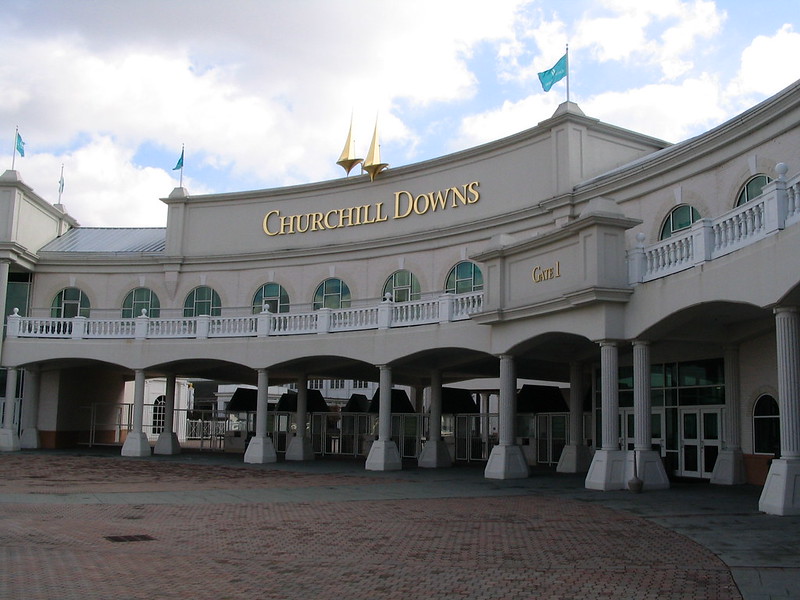
In 1875, Meriweather Lewis Clark Jr. opened a racetrack in Louisville, Kentucky. He wanted to draw some of the best horses in the country to his racing meet, and so he created a special headline race. He designed this race after England’s most famous race, the Derby Stakes, even naming it for its famed predecessor, titling it the Kentucky Derby.
Most would judge this venture as a success, for the race has been run every year since with no interruption. Indeed, even world wars and global pandemics could only delay the tradition- never cancel it.
This year marks the Kentucky Derby’s 150th anniversary. Although the race has, in some ways, evolved with the times, in many ways it remains just as Clark built it to be. What has changed and what has remained the same? Let’s take a look.
Things That Have Changed
The Distance
Clark modeled the Kentucky Derby after England’s Derby Stakes. Although Clark’s race was on dirt instead of grass, he initially kept the race at England’s classic distance of 1 ½ miles. However, in 1896 the race was shortened to 1 ¼ miles; horsemen worried that the extra quarter mile was too far for three-year-olds in May (in contrast, the English Derby is run in June).
As a result, the final times for the earliest runnings of the Kentucky Derby are significantly slower than twentieth and twenty-first century times. The record holder for the initial distance was 2:34.5, set by Spokane in 1889.
The Value
While the Kentucky Derby has always been a celebrated event, it has never actually been the richest race in America. For many years, it wasn’t even the richest race in the Triple Crown series.
The initial purse for the Kentucky Derby was $2850 for the winner, and $200 to place. The purse increased as time went on and the event grew in prestige. It reached a value of $1 million in 1996, doubled again in 2005, and was raised by another million in 2019.
For the landmark anniversary this year, the purse was raised to $5 million. While there are richer races in America, the Derby is the richest race restricted to three-year-olds.
The Coverage
In the nineteenth century, the only way to experience the Kentucky Derby- or any race- was to attend in person. The races would be reported in newspapers in the days following the runnings, and although photography existed, it was not commonly used for horses at the time and was certainly not fast enough to capture horses in motion. Instead, the earliest Derby winners were immortalized in oil paintings.
The technology boom in the twentieth century brought the Kentucky Derby to increasingly broader audiences. Radios began to be commonplace in the 1920s, and the first national radio broadcast of the Run for the Roses allowed approximately 5-6 million people to experience Flying Ebony’s victory. The broadcast was made internationally in 1932, so that British racing fans could celebrate with the connections of Burgoo King. Ponder, in 1949, was the first to have his race shown on television, and when Hill Gail won in 1952, it was the first time the race was shown nationally in real-time.
Nowadays, not only is the Kentucky Derby shown live on television, but it is available to stream on the internet through racing apps. These apps not only show the races, but feature stories describing the horses and humans woven into them.
Things That Have Stayed The Same
The Track
When Clark opened his racetrack in 1875, he initially called it the Louisville Jockey Club. The name was changed to Churchill Downs in 1883. The iconic Twin Spires were added a few years later in 1895.
However, the race has remained in its same location for every running. This is in contrast to the other races in the Triple Crown series; the Preakness Stakes and the Belmont Stakes have both changed locations throughout their history (and in fact, this year’s Belmont Stakes will be run at Saratoga Racecourse). The English Derby has also been run at Newmarket instead of Epsom during the world wars.
The Horses
The Kentucky Derby has always been restricted to three-year-old Thoroughbreds, so the eligibility requirements have remained the same throughout the race’s history.
However, the similarities do not end there. All Thoroughbred horses descend from three founding stallions: the Byerly Turk, the Darley Arabian, and the Godolphin Arabian. In that sense, all of the Kentucky Derby runners are related.
It goes deeper than that, though. Many early Kentucky Derby winners went on to become important sires, and their descendants went on to win Kentucky Derbies of their own. A total of 18 Kentucky Derby winners by TwinSpires.com went on to have direct male-line descendants win a later iteration of the race, with 1964 Derby winner Northern Dancer eventually becoming the ancestor of seven subsequent victors.
The Atmosphere
Most importantly, the atmosphere of the Kentucky Derby has always been one of celebration: celebration of Kentucky, celebration of sport, and celebration of the gorgeous Thoroughbred racehorse!
