

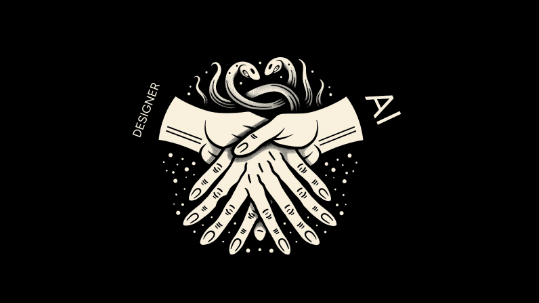
For any corporation, it is vital to have a brand identity that is not only effective but also unforgettable. To that end, a logo can hardly be surpassed as a way to serenely convey your brand’s message and, importantly, its personality. When artificial intelligence (AI) is increasingly doing the work of graphic designers, anyone would wonder if it can do the work of a logo designer. The answer, for several reasons, is no.
The Reasons for AI’s Inadequacy in Branding
Logos generated by artificial intelligence are frequently promoted as fast, budget-friendly, and straightforward solutions. The way it works is that you input some basic preferences, and voila! — a pre-designed logo appears before your very eyes. But while an AI logo is quick and easy, it is conspicuously lacking in depth. The reason for that is fundamentally tied to what AI is and what it does: AI tools produce (or “construct” — if we’re going to make use of some design-related vocabulary) logos based on pre-existing templates and patterns, in a way that doesn’t feel all that different from what happens in Adobe Illustrator. At best, what comes out of the AI Logo Maker is a generic and characterless thing. At worst, it’s a sea of sameness, as all businesses using the tool arrive at any number of indistinguishable designs.
The Human Element: The Continued Superiority of Designers
In contrast, human logo designers offer an asset that no AI logo design tool can replicate: creativity and true personalisation. When a human designer approaches a project, they always first consider the inputs. But then, like an artist preparing for a canvas, they go much deeper—much further than any AI tool can. A designer dives into your brand’s history, mission, and goals. That process allows them to emerge with a vision for the logo.
You might wonder: Shouldn’t this be the same for AI? After all, AI aims to mimic human processes. But that’s just it. AI can only mimic the surface-level inputs—“what” you want. It cannot mimic the deeper, more intimate “why” and “how” that all great designers embody when undertaking a logo project.
In addition, human designers possess a rich blend of experience and intuition, which AI simply can’t replicate. They know how to balance essential design elements—like colour, shape, and typography—in making a logo that is cohesive and visually stunning. They also understand how a logo must function across a number of different platforms, whether that be a website, business card, or billboard. AI tools, on the other hand, often miss these vital design considerations, which may result in a logo that is either not versatile enough for many different scenarios or not effective enough to make the kinds of impressions a good logo should make.
The Future Still Belongs to Designers—Here’s Why
No one can dispute that human designers, despite developments in artificial intelligence, are still the best option for businesses when it comes to creating truly one-of-a-kind, meaningful, and marketable logos. While AI is capable of generating logos at great speeds, it’s important to remember that crafting a brand identity is a task best done with human touch. After all, a logo is often the first thing that impresses a customer when they come into contact with a company. Shouldn’t the face of your business be something that’s distinct, something that better reflects the individuality and passion behind your venture than anything an AI could quickly churn out?
If you’re in search of a logo that genuinely embodies your brand, the decision is obvious: it’s still best to go with human designers. The logo design process is an art, and only humans possess the necessary creativity and multimedia storytelling experience to envision truly dynamic logos and brand identities.
