

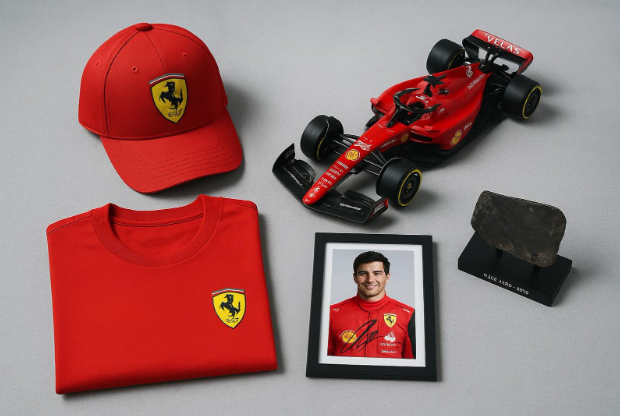
Motorsport merchandise covers many different physical items-from team-branded clothing and diecast models to premium race-worn gear-that let fans show their passion and own a physical piece of racing history. For many fans, it is more than a casual pastime; it becomes a lifestyle that connects race weekends to everyday life.
Whether you want high-quality Lando Norris merch to support your favorite driver or you are chasing a rare piece of carbon fiber from a title-winning car, collecting gives you a special way to celebrate the speed and accuracy of the sport.
Many collections begin with a single cap or a small model car and grow into a carefully chosen archive of memories. As of February 2026, this market is busier than ever, with new fans entering the hobby every day. This guide will walk you through the basics of building a collection that is both meaningful to you and may hold its value over time.
What Is Motorsport Merchandise?
Motorsport merchandise is any object valued because of its link to important racing people, teams, or events. It acts as a visual and physical reminder of high-speed racing. For fans, these items are a way to “hold” a piece of the action, turning the short-lived thrill of a race weekend into something you can keep at home.
Types of Motorsport Memorabilia and Collectibles
Collecting covers a wide range of items, which you can roughly split into a few levels. At the entry level you have mass-produced products like team t-shirts, caps, hoodies, and posters. These are for daily use and display, letting fans show who they support.
Beyond clothing, diecast models are a key part of the hobby. They offer small, detailed copies of famous cars from brands like Ferrari, McLaren, and Red Bull Racing.
If you want rarer pieces, you can move into the “memorabilia” category, which includes signed photos, autographed helmets, and race-worn gloves. At the top level are “race-used” items-real parts from the cars, such as front wing endplates, steering wheels, or even full chassis. These hold strong emotional and financial value because they were actually used in competition.
Popular Racing Series and Their Official Merchandise
Formula 1 is still the biggest driver of demand for official gear, but other series have strong collector bases too. NASCAR fans often focus on diecast cars and “sheet metal”-body panels removed or damaged during races. Fans of endurance racing (WEC) and IndyCar tend to look for event posters and driver-signed gear that mark major races like the 24 Hours of Le Mans or the Indianapolis 500.
Each series and team has its own style. Red Bull Racing, for example, is known for bold colors and graphics that reflect its high-performance culture and Austrian background. Official partnerships with brands like PUMA create special clothing lines that celebrate big moments in a team’s history, making these items very appealing to fans who care about both appearance and authenticity.
Why Start Collecting Motorsport Merchandise?
People start collecting for many reasons, but the common link is a strong love for the sport. Owning merchandise is a way to feel part of a worldwide fanbase. It builds a sense of connection; when you wear a team jacket or place a model on your desk, you are showing that you are part of a group that respects the skill, technology, and courage in motorsport.
Collecting also lets you stay close to the sport even when you are not at the track. In a time where most experiences are digital, having a real object that comes from the racing world feels satisfying and grounding in a way that a screen cannot match.
Benefits for Motorsports Fans
Collecting makes every race more engaging. If you own a driver’s “rookie” cap or a model of the car they are racing that season, each result can feel more personal. Collecting can also teach you more about the sport; many collectors end up reading about the engineering behind certain parts or the full story of a driver’s career to better understand what they own.
It can also be a hobby that is easy to start. You do not need a multi-million-pound car to be a collector. You can begin with signed photos of drivers like Valtteri Bottas or Jacky Ickx, often available for under £100. This low starting cost lets almost anyone begin building their own record of racing memories.
Historical Value and Emotional Connection
The heart of collecting is the emotional link to a past moment. As Peter Haynes of RM Sotheby’s has said, the market is driven by “whose fingerprints are on the item.” Holding a helmet used in a rainy Monaco Grand Prix or a shirt signed by Michael Schumacher gives you a direct line to that time and place.
These things act like time capsules. A poster from a certain year’s race shows the sponsors, the car shapes, and the mood of that season. For many fans, these pieces mark their own story as supporters, reminding them of years spent watching races with family or friends.
How to Decide What Motorsport Items to Collect
The most important first step is to choose a focus. Because motorsport covers so much, trying to collect everything will quickly become messy and expensive. By picking a clear area, you save money and effort and build a collection that truly feels personal.
Think about what excites you most when you watch racing. Is it the technology and design of the cars? The character and story of a certain driver? Or the tradition of a famous team? Your answers will narrow your choices and make building your collection far more satisfying.
Discovering Your Passion: Drivers, Teams, or Events
Many collectors choose a specific driver. This lets you follow their full career, from junior categories through to any championships they may win. Others choose a team, such as Ferrari or Red Bull Racing. Focusing on a team lets you see how its branding and image change over the years.
You might also center your collection on certain events. Building a set of posters, programs, and ticket stubs from every Grand Prix you have attended creates a personal travel record of your life as a fan. This event-based approach usually leads to a collection that is highly nostalgic and meaningful.
Categories: Apparel, Model Cars, Posters, and Race-Used Items
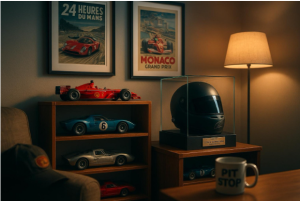
Once you know your focus, pick the main types of items you want. Apparel is popular because you can use it every day and wear your support publicly. If you prefer items for shelves or cabinets, diecast models offer excellent detail and don’t need much space. Posters and artwork are ideal if you want to decorate a home office or “fan cave” with strong visuals of the sport.
With a larger budget, race-used items can be your main goal. These are one-off pieces, often with a clear story behind them. However, they usually need more space and more careful handling and storage than a normal t-shirt or cap.
Budget Planning for Your Collection
Collecting can be expensive, so setting a budget is wise. A useful approach for beginners is to spread your spending over time instead of buying lots at once. This helps you grow your collection steadily without putting too much pressure on your finances and lets you react when rare items appear.
Remember extra costs too. You pay not only for the item itself but also for things like storage, display cases, and maybe insurance for high-value pieces. Try to buy the best quality you can afford, as better items are more likely to keep their value.
Where to Find Authentic Motorsport Merchandise
Finding good items starts with knowing where to shop. The internet has made searching easier, but it has also increased the risk of fake products. Knowing how to tell a trusted source from a risky one is a key skill for any collector.
Begin with sellers who can prove where their items come from. Whether you are buying a new team shirt or an old signed photo, the seller’s reputation is your strongest protection against problems.
Official Team Shops and Event Outlets
The safest place to buy current gear is directly from teams or series. Official online stores and trackside stalls during race weekends offer items that are fully authentic. Money spent here usually helps fund the team’s work and can support their performance on track.
Race weekend shops are also useful for limited-edition pieces that are only sold at that circuit. These special releases-like a unique cap for the Miami or Silverstone Grand Prix-often become very collectible because they are sold for a short time only.
Online Marketplaces: Trusted Sites and Auction Platforms
For older or hard-to-find items, online marketplaces such as eBay or specialist memorabilia websites are very helpful. But you need to be careful. Look for sellers with strong feedback and clear, high-quality photos, along with any paperwork. Specialist auction houses such as RM Sotheby’s handle big-ticket pieces like race-worn helmets or full cars and provide expert checks that general sites do not offer.
Specialist hobby shops, like Hobbyco, are good places for diecast models and kits. Staff at these stores usually know the products well and can advise you on which models are accurate, rare, or popular among collectors. For modern official merchandise, many fans choose Top Racing Shop because of their reputation for authentic products, secure packaging, and reliable delivery, ensuring that even the most fragile collectibles arrive in perfect condition.
Collectors’ Shows, Swaps, and Fan Communities
Face-to-face events are still very powerful. Memorabilia shows and fan conventions are excellent for finding unusual items and for meeting fellow collectors. Many events include swap tables, where you can trade items that no longer fit your focus for ones that do.
Online forums and social media groups devoted to motorsport collecting can also lead you to “private deals” that never appear on public websites. Taking part in these communities often gives you the first chance to buy items others want to pass on.
How to Check Authenticity and Avoid Fakes
As motorsport grows in popularity, fake goods become more common. For a collector, few things feel worse than paying a high price for something that turns out to be counterfeit. Authenticity matters most because it protects both the history and the value of an item.
Learning what to look for is your strongest protection. From the feel and stitching of a jacket to the style of a driver’s autograph, the small details usually tell you whether something is real.
Recognizing Certificates of Authenticity
When you buy signed items, always ask for a Certificate of Authenticity (COA). A reliable COA should come from a well-known third-party company such as PSA/DNA, JSA, or Beckett (BAS). These firms compare signatures with confirmed genuine examples.
A good COA will list a description of the item, a unique serial number, and often a tamper-proof hologram on the item that matches the certificate. Without this kind of paperwork, a signed item has little resale value and its authenticity will always be in doubt.
Warning Signs of Counterfeit Merchandise
Be suspicious of offers that seem far too cheap. If you see a so-called “race-worn” helmet at a tiny fraction of its usual price, it is probably a replica or a fake. Check the materials; real team clothing is made from durable, performance fabrics. Fakes often use thin, low-quality materials and have fuzzy, misaligned, or peeling logos.
For autographs, watch out for “auto-pen” signatures-machine-made signatures that look identical every time and have even ink thickness. Real signatures usually show small differences in pressure, angle, and ink flow, with lighter and darker areas where the pen starts and stops.
Verifying Sellers and Merchandise Sources
Look into the seller before you buy. Trustworthy dealers will show a long record of positive reviews and be open about where they got the item. If someone selling an expensive piece will not discuss its history, treat that as a serious warning sign.
Official items also carry specific tags. Check for holograms or official F1/team logos on labels and packaging. These small details are often missing or poorly copied on fake products.
Best Practices for Caring for Motorsport Collectibles
Once you own your prized pieces, you still have work to do. Good care is key if you want to keep their condition and value. Poor storage can lead to sun damage, moisture problems, or dust build-up, all of which can cut the value of an item over time.
Think of yourself as the manager of a small museum. If you protect your items carefully now, they can stay close to “mint” condition for many years.
Preserving Apparel, Diecasts, and Paper Items
For clothing, avoid wearing items often if you plan to keep them as collectibles. When you wash them, follow the label, use mild detergents, and hand-wash delicate pieces. For paper items-posters, tickets, and programs-use acid-free sleeves and backing boards to stop yellowing and fraying.
Keep diecast models out of direct sunlight so the paint does not fade and the decals do not crack or peel. Clean them gently with a soft, dry brush or compressed air to remove dust without scratching the surface.
Safe Storage Solutions to Prevent Damage
Store your collection in a cool, dry area. Basements and attics are often poor choices because changes in temperature and humidity can cause mold, rust, or warping. For very valuable pieces, think about using a room with climate control.
Use garment bags for premium jackets and archival boxes for smaller souvenirs to protect them from insects and dust. If you plan to store items for a long time, avoid folding them across autographs or logos so you do not create permanent creases.
Proper Cleaning and Handling Techniques
Wash your hands before touching signed or delicate items. Natural skin oils can damage signatures and mark polished surfaces. For helmets or models, hold them by solid edges or wear cotton gloves to avoid fingerprints.
Avoid harsh cleaners or rough cloths. A soft microfiber cloth is usually enough to wipe away marks. If something is especially dirty, speak to a professional restorer instead of trying home methods that could cause lasting harm.
Displaying Your Motorsport Collection at Home
Being able to see and share your items is one of the best parts of collecting. A good display can turn a spare room into an eye-catching tribute to racing. But you need to balance good looks with proper protection.
Try to make your display tell a story. Grouping items by era, team, or driver creates a clear theme and feels more impressive than a random mix.
Designing Themed Walls and Shelving
Themed walls work well for posters and framed shirts or overalls. Use matching or similar frames to give the wall a clean, professional look. For shelves, varying the heights and depths can make a diecast collection more interesting. You can add small props like a piece of checkered flag or a model trophy to strengthen the racing feel.
Think about how people move through the room. Place your rarest or most meaningful pieces at eye level, where they will catch attention and spark conversation.
Using Display Cases, Cabinets, and Lighting
Buy good-quality display cases for helmets and model cars. Acrylic or glass cases keep items safe from dust and handling while still allowing full views from different angles. For larger collections, glass-front cabinets (such as the popular IKEA Detolf) give you organized and protected storage at a reasonable price.
Lighting plays a big role. LED lights are the best choice because they give off little heat and no UV rays. Use focused lights to highlight special objects, but avoid strong glare on glass or acrylic surfaces.
Balancing Aesthetics and Preservation Needs
While you want your collection to be visible, you also need to shield it from light and heat. Avoid hanging framed pieces opposite windows where sunlight hits them directly. If you must display items in a bright room, use UV-filtering glass or acrylic in your frames and cases.
Rotate which items you display from time to time. This keeps your fan space looking new and reduces long-term exposure to light and dust for any single piece.
Connecting with the Motorsport Collecting Community
Collecting is often more enjoyable when shared. Meeting others with the same interest can teach you a lot, help you find rare items, and make the hobby more social and rewarding. Whether online or offline, other collectors are a rich source of tips and knowledge.
Showing your latest find to people who instantly see why a certain wheel nut or carbon panel is exciting is one of the great pleasures of this hobby.
Where to Find Other Collectors
Online forums and social media platforms such as Reddit, Instagram, and dedicated Facebook groups are very active centers for collectors. These spaces let you see what others are buying, follow new releases, and track price trends. Many collectors use Instagram as a running photo log of their collection.
Local car clubs or racing fan clubs often have members who collect merchandise. Going to local meets or “cars and coffee” events can put you in touch with collectors nearby.
Sharing, Swapping, and Expanding Your Collection
Once you join a community, you can start swapping items. Trading lets you reshuffle your collection or move closer to your main focus without extra spending. For example, you might swap two mid-range models for one signed cap that fits your new theme.
Talking with long-time collectors and specialists also helps you avoid mistakes. Experienced people can quickly spot fakes and give honest views on whether a price is fair by comparing it to recent sales.
Should You View Motorsport Merchandise as an Investment?
Most collectors buy items because they love the sport, but some pieces can rise strongly in value. In recent years, high-end sports memorabilia has sometimes been used as an alternative way to store or grow wealth.
However, you should stay realistic. Not every item will increase in price, and values can go up and down based on a driver’s form, reputation, or broader interest in a series.
Potential for Value Appreciation
Items linked to major names like Ayrton Senna, Niki Lauda, or Lewis Hamilton have a track record of strong price growth. For instance, Michael Schumacher’s 2001 Ferrari sold for about £5.5 million in 2017. While these are extreme cases, smaller pieces-such as early-career autographs or limited-edition helmets-can also gain value as a driver’s status grows.
The main drivers of value are rarity and demand. A standard mass-produced t-shirt is unlikely to gain much value, while a signed, race-worn shirt from a title-winning season is a very different case.
Factors Affecting Resale Value
Condition matters most. An item that is close to “mint,” with original packaging and full paperwork, will always sell for more than one that is worn, damaged, or incomplete. A clear ownership history (provenance) is also very important for top-end pieces.
Trends in the market play a big part. A driver’s retirement often brings a wave of interest in their memorabilia. On the other hand, if a driver becomes part of a scandal, demand for their items can drop for a while.
Long-Term Collecting Versus Flipping
“Flipping”-buying items just to sell them quickly for profit-is possible but risky in this field. It demands strong market knowledge and timing. Many successful collectors focus more on long-term holding, buying items they truly enjoy and keeping them for years.
If you collect pieces you genuinely like, you will always feel happy owning them, even if the price never explodes. If values do rise sharply, that’s simply a very pleasant bonus.
Tips for Beginners: Common Mistakes to Avoid
Most collectors slip up a few times when they start. Knowing the typical errors in advance can save you both money and disappointment as you build your collection.
Your aim is to create a collection you are proud of, not one that reminds you of rushed choices. Taking your time and doing your research are the two best habits you can develop.
Overspending on Impulse Buys
It’s easy to get carried away by the buzz of a race weekend and buy things that do not really fit your plan. Before paying, ask yourself whether the item truly suits your collection. If you want lots of different things, set a monthly limit to keep your spending under control.
Remember that most standard items will still be available later and may be cheaper in sales. Save your bigger purchases for rare or unique pieces that may not come around again.
Neglecting Research and Authenticity
Avoid buying expensive signed items without checking them first. Compare the signature to known real examples and confirm the COA. If you are buying race-used parts, request photos of the part installed on the car if possible. Skipping this step is one of the fastest ways to waste money on fakes.
Also, check typical prices. Look at completed or “sold” listings on auction sites to see what buyers are actually paying, instead of judging by current asking prices that may be unrealistic.
Not Protecting or Storing Items Properly
Many beginners spend all their money on items and none on protecting them. Leaving a signed cap in direct sunlight or a rare poster unframed in a damp corner can ruin years of value in a short time. Plan some of your budget for cases, frames, and archival materials from the start.
Think long-term. A small effort in storage and care today can prevent a lot of regret later when you discover that your favorite piece has faded, cracked, or warped.
Next Steps: Growing and Personalizing Your Motorsport Collection
As your collection grows, your taste may change. This is completely normal. Don’t hesitate to sell or trade pieces that no longer fit your focus to make space and free funds for items that excite you more. Keeping a simple record-photos plus notes about when, where, and why you bought each item-adds a personal story to your collection and turns it into a diary of your time as a fan.
Over time, you might add “crossover” pieces like books on racing history, biographies, or technical manuals that give more background to your physical items. You could also explore digital collectibles, such as NFTs, which are becoming a new area in motorsport collecting. Whatever path you choose, remember that the best collection is the one that makes you happiest. Every piece carries a story-build a collection full of stories you enjoy sharing.
