

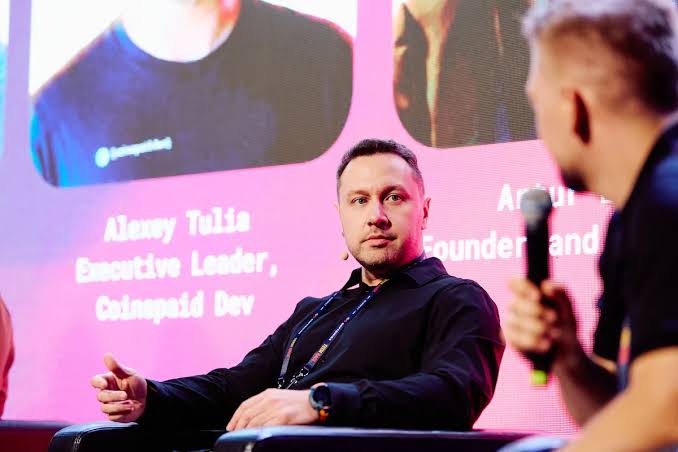
Engineering leaders should decide who owns AI-driven decisions before agents are allowed to act inside live systems, according to Alexey Tulia, Executive Leader at Coinspaid Dev. He shared his view at a Warsaw industry event focused on the impact of AI on engineering.
As The AI Journal reports, Tulia spoke on the AI Impact in Engineering panel at Tech Race Summit 2026, where the discussion turned to the changing responsibilities of engineers and CTOs. Coinspaid Dev, where he leads, is an independently owned and operated software engineering company specializing in blockchain infrastructure development. It has more than 120 engineers, over 11 years of industry experience and teams in software engineering, infrastructure, security and R&D that have built distributed systems and blockchain infrastructure running on more than 20 blockchain networks.
Tulia began with the effect AI is already having on day-to-day engineering work. Coding and prototyping are becoming much faster, and he argued that the time freed up should be used to understand the business problem behind each task and to stay involved until the result is working in production. That requires support from leadership. Teams need to hear the business context of what they are building and to know the outcome they are expected to deliver. With that clarity, managers can assess productivity through the correctness, maintainability, security and operational performance of the software. The volume of code, which AI can now inflate with little effort, says far less about the value a team creates.
Budget decisions came next. Tulia encouraged CTOs to link every AI investment to a specific need inside their organization. The capabilities he considers most important are strong APIs, reliable data, automated testing, observability, security and flexible architecture, because they allow new technology to be introduced safely. He also stressed that engineering teams need spare capacity. If a roadmap absorbs all available resources, there is no room to try a promising tool or react when priorities change. Spending on architecture and on reducing dependence on vendors may not show immediate returns, yet it lowers the cost of replacing a provider or rethinking a system once assumptions shift. “I don’t need to predict the future perfectly. I need to make being wrong cheap,” Tulia said.
The most pressing issue, in his view, is what happens when AI agents are given real power. Businesses currently use AI mainly for drafting and analysis, but the next stage will link agents to live systems, from sensitive data to deployment pipelines, and allow them to take action. “The more authority we give machines, the more important accountability becomes,” Tulia said. He described an agent capable of preparing a change and deploying it to production, raising two questions every company must answer: whether that deployment may proceed without human approval, and who carries responsibility if it fails. Before handing over such access, he said, an organization needs permission controls and audit logs, along with the means to stop the agent and to recover from a failed deployment. Taken together, these conditions express his central point that more autonomy in production demands clearly defined authority and a human who remains responsible.
Looking further ahead, Tulia expects that by 2029 smaller engineering teams will handle larger areas of responsibility and that AI will write most production code. That shift will raise the value of verification and technical judgment, and it will keep deep technical expertise and business understanding at the heart of the CTO role, especially as easier software creation brings more vendors and AI-generated systems into organizations. “I think technical judgment becomes even more important,” he said. For now, his message to engineering leaders is practical: define the safeguards and the ownership model first, and only then give AI agents access to critical production systems.
