

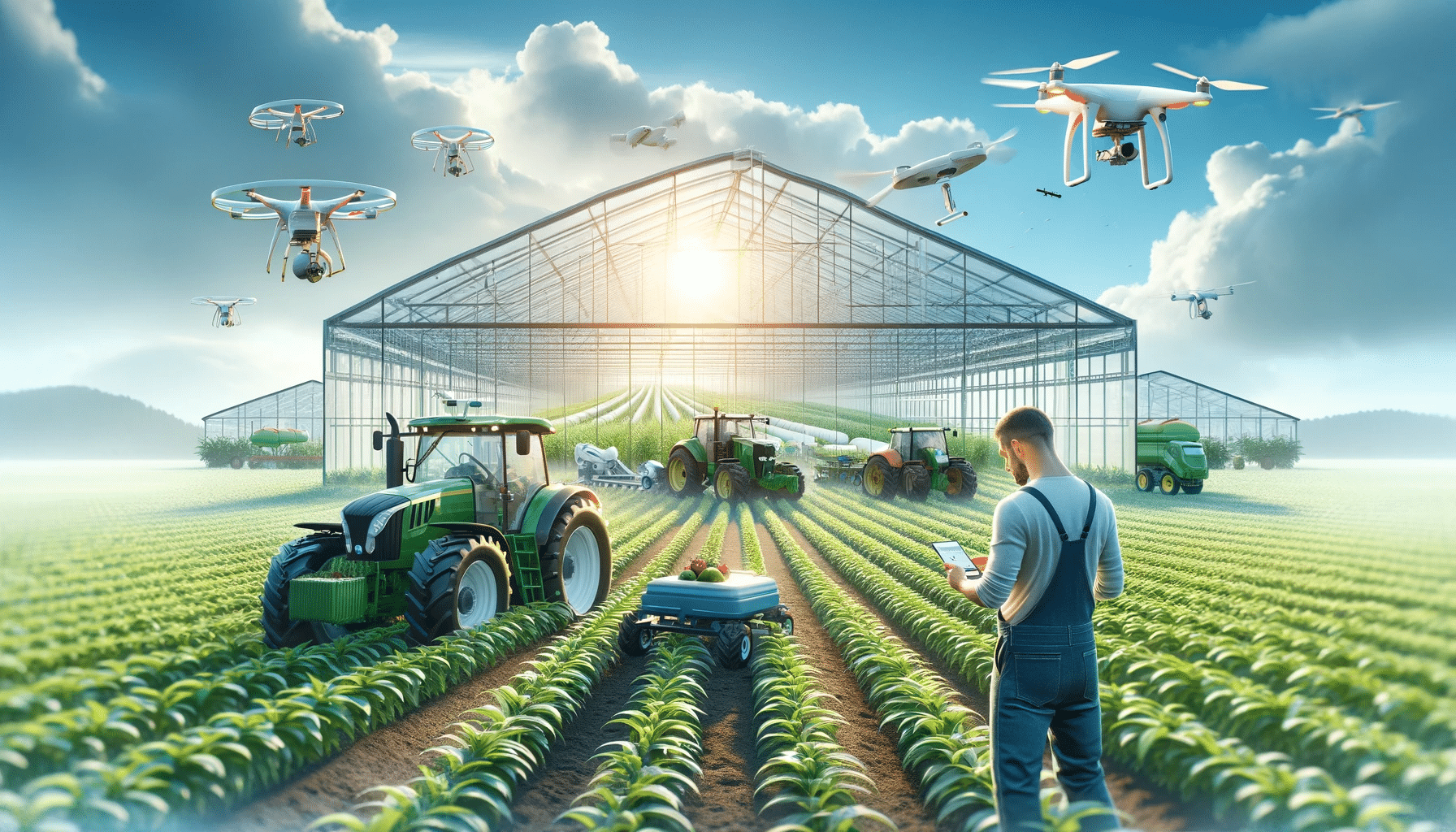
The agricultural equipment market is witnessing a major transformation, accelerated by technological advancements like agricultural casting, changing agricultural practices, and the demand for improved sustainability and efficiency.
Market Overview
Agricultural machinery or equipment plays a vital role in boosting agricultural practices across the world. The global agricultural machinery market consists of a wide range of equipment, tools, and agricultural casting parts to facilitate a wide spectrum of agricultural operations, right from transportation to harvesting, livestock management, and irrigation.
The global agricultural machinery market is expected to grow at an exponential rate, driven by factors like increasing modernization, technological advancements, the need for better productivity to fulfil food demands, and increasing labour costs. As per a recent study report, it is believed that the global agricultural equipment market is expected to reach around USD 169 billion by the time of 2031.
Due to the ever-rising market demands, leading agricultural casting manufacturers, like AKP Ferrocast, come forth with innovative mechanisms to boost efficiency and productivity within the industry.
Leading Technological Advancements that Drive Innovation
From conventional manual labour to a highly technologically advanced and industrialised sector, agriculture has indeed come a long way. Leading agricultural businesses and farmers are continuously searching for new ways to boost production and improve efficiency due to the increasing food demand.
A leading manufacturer of agricultural casting parts, AKP Ferrocast, has remained at the forefront of embracing cutting-edge technologies and trends in the agricultural industry. Some of the latest technological advancements to look out for are:
-
Precision Agriculture
The utilisation of precision agriculture by farmers is transforming the way in which they manage their resources and crops. Farmers are now able to access and boost the productivity of their fields with improved precision, thanks to advanced technologies like smart sensors, GPS technology, and satellite imaging.
Farmers are also capable of performing core operations like pesticide application, variable rate fertiliser, and auto-steering while yielding advanced monitoring with the help of highly advanced GPS-enabled tractors. These advancements are capable of boosting crop yields and maximising resource efficiency in modern farming,
-
Autonomous Farming Machinery
Autonomous farming vehicles are increasingly becoming common in industries beyond the automotive sector. For instance, drones are becoming increasingly useful in agricultural applications like spreading seeds or pesticides.
With the ability to independently perform operations like harvesting, ploughing, and planting, autonomous agricultural machinery is able to minimise the need for hard labour and improve agricultural output. Moreover, drone technology assists farmers in monitoring the condition of their crops, spraying pesticides accurately wherever needed, and spotting problem regions. This mechanism is efficient and is gaining immense popularity in modern farming practices.
-
Choosing Renewable Energy
Modern farming techniques are leveraging renewable energy in their machines with a focus on sustainable operations. Irrigation systems and other agricultural operations are increasingly supported by solar and wind energy, minimising the need for conventional fossil fuels and reducing greenhouse gas emissions.
-
Energy-Efficient Machinery
Modern agricultural practices are increasingly focusing on sustainability. To design machinery that is energy-efficient and minimises the carbon footprint of the industry, leading automobile companies and manufacturers of agricultural casting parts are actively funding research & development. The sector is dedicated to coming up with environmentally friendly technology and solutions that support the environmental goals, from solar-powered tractors to low-emission engine parts.
-
Nanotechnology Applications
The concept of nanomaterials has gained immense potential when it comes to improving soil health and the overall potency of fertilisers and pesticides. Modern agricultural machinery and parts make use of nanotechnology to leverage these nanoparticles, resulting in improved nutrient uptake and minimal environmental effects.
-
3D Printing in Spare Parts
For optimal machine functioning, agricultural equipment maintenance is crucial. To efficiently and quickly design replacement components, some agricultural casting companies leverage 3D printing technology. As such, farmers experience reduced downtime. Moreover, the supply chain is also streamlined, and there is no more requirement for an expansive inventory.
How are Agricultural Casting Manufacturers Boosting the Sector?
In the field of agricultural machinery, various casting products have to be designed and set up together. In turn, this calls for agricultural castings to be designed in different shapes, delivering higher productivity and improved dimensional accuracy.
Leading iron casting manufacturers, like AKP Ferrocast, are rising to this challenge. Minimal machining is getting involved in the manufacturing process of advanced agricultural castings. Innovative casting procedures are implemented to ensure both internal and external configuration optimization. To boost cost-effectiveness and reduce maintenance hassles, the total number of secondary parts or components in agricultural casting products is also reduced.
How Do Agricultural Casting Products Optimize Machinery Performance?
Leading agricultural casting parts manufacturers, like AKP Ferrocast, come up with components featuring smooth finishes and adequate tolerance levels.
Sub-optimal finishing in agricultural equipment or parts can lead to major operational glitches and a frequent need for replacement or repairs. To minimise such issues, the top casting manufacturers usually implement ceramic moulds to deliver smooth finishes with minimal imperfections.
The overall reliability of these agricultural casting parts is enhanced due to improved tolerance abilities. When sourced from a renowned manufacturer and installed correctly, agricultural castings can deliver exceptional longevity.
Conclusion
The agricultural industry is undergoing a transformative shift, driven by groundbreaking technological advancements. Emerging trends such as precision agriculture, automation and robotics, and the Internet of Things are revolutionising traditional farming practices. These innovations are enhancing efficiency, sustainability, and overall productivity.
As we look ahead, the future of agriculture promises to be even more exciting. Continued advancements in artificial intelligence, biotechnology, and nanotechnology will likely lead to further breakthroughs. These technologies have the potential to address global challenges like food security, climate change, and resource scarcity.
In conclusion, the convergence of technology and agriculture is paving the way for a more sustainable, efficient, and productive future. By embracing these emerging trends and innovations, farmers and agricultural businesses can position themselves for success in the years to come.
