

College life thrills students as they explore the world beyond high school and plan for the future. It’s both difficult and rewarding, providing a life-changing experience. However, it can be overwhelming when students take on more duties. Aside from selecting a major and navigating college, students must pass their classes while juggling life’s demands.
The financial hardship of attending increases the demand for college preparation assistance. Skilled college counselors help students balance the benefits and drawbacks of on-campus versus off-campus housing when budgeting for the school year. There is no single option; for some, apartments are ideal, while others choose off-campus lodging with family, friends, or on their own. However, many first-year students cannot afford this, making the decision more difficult.
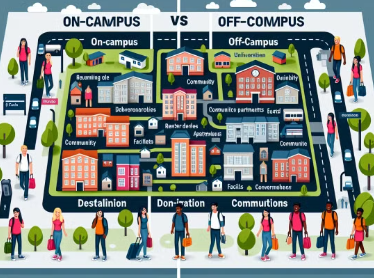
If a student needs assistance with college planning, determining whether or not to live on campus is an excellent place to begin. Examine the advantages and disadvantages of each choice in order to develop a successful strategy. Living on campus is not restricted to dorms; most colleges provide a variety of university-owned housing. Some institutions like IUP student housing even offer off-campus choices that maintain the advantages of being close to the action.
The Benefits of Living In a Dorm
What are the benefits of living in a dorm? Why do college consultants recommend it for some students? Why do some colleges require campus housing for part or all of a student’s time there? On-campus living provides unique perspectives and several benefits for students ready to advance in their education.
An Immersive College Experience
Some institutions require students to live on campus for all or part of their academic careers, while others make it optional. However, dorm life offers a one-of-a-kind opportunity to truly experience college. Immersion improves the student experience by making them feel like members of the university rather than visitors.
Proximity to Classes
Dorm living has a significant advantage: proximity to classes. Some dorms are in the same building as the classrooms, while others require a walk across campus, which many people consider part of the experience. Avoiding a commute is advantageous, especially when petrol prices are high, and reduces stress for students.
Social Interaction
Perhaps the most significant aspect of living on campus is the opportunity to meet friends, engage with other students, and form connections that can endure for years, if not a lifetime. Students can study together, providing insights and encouragement that make it easier to overcome the hardships of college life.
Reasons to Live Off-Campus
While staying in a dorm might be the collegiate dream, it’s not for everyone. Living off campus has several advantages, hence students should not feel they have to live in a dorm to enjoy college. To cut costs, some might even decide to live at home with their parents.
More Housing Options
For a student, off-campus housing offers more freedom in choosing their area of residence. Some may live closer to the stores and amenities they’ll be using most during the school year, while others can pool their resources with peers and find a housing arrangement that suits their sensibilities.
Great Flexibility
Depending on the student, off-campus housing is more of a chance to express individuality. Renting a house or student apartment can be financially taxing while also attending classes. Still, students value the opportunity to decorate, socialize, and otherwise manage their living space more freely than at dorms.
Having Your Own Space
Every student needs a break from studies, and having distance between college and home helps. This offers a glimpse of adult life, letting students experience the “real world” for the first time. College consultants suggest gaining experiences to shape career expectations, which off-campus housing can encourage.
