

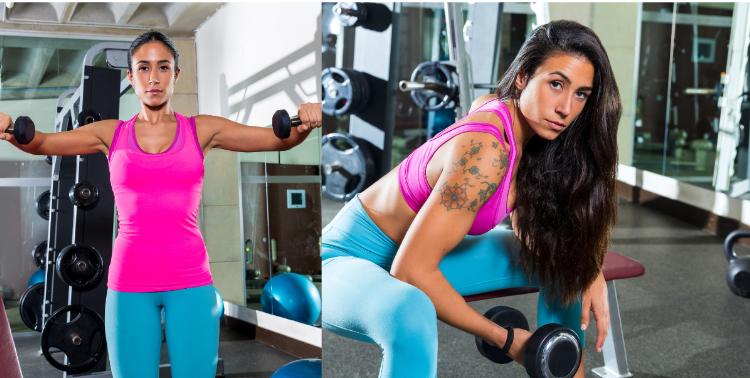
Embarking on a fitness journey often leads us to the question: “What muscles do dumbbell flies work?” Dumbbell flies are a quintessential exercise for sculpting a well-defined chest, but their impact extends far beyond the pectorals. In this blog, we delve into the intricacies of this versatile exercise, unraveling the muscles it targets and the holistic benefits it offers.
Whether you’re a fitness aficionado with experience in Oakville, on the lookout for the ideal addition to your workout regimen, or an individual exploring various dumbbell sets in Canada, delving into the science behind dumbbell flies is the initial stride toward realizing their complete benefits.
1. The Primary Target: Pectoralis Major
At the heart of the dumbbell fly lies its profound impact on the pectoralis major, the large, fan-shaped muscle that forms the bulk of your chest. This exercise emphasizes the outer and upper regions of the pectorals, promoting a well-rounded chest development. Executing dumbbell flies with proper form ensures that this key muscle is engaged, contributing to that coveted chest definition.
2. Synergistic Muscles: Deltoids and Triceps
While the pectoralis major takes the spotlight, dumbbell flies engage other muscles to provide stability and control throughout the movement. The anterior deltoids, located on the front of your shoulders, play a crucial role in supporting the lifting motion. Simultaneously, the triceps act as stabilizers, assisting in extending the elbow and maintaining control during the descent phase of the exercise. This synergy ensures a comprehensive upper-body workout beyond just chest isolation.
3. Core Engagement for Stability
A surprising but often overlooked aspect of dumbbell flies is the engagement of the core muscles. To execute the exercise effectively, your core must stabilize your torso, preventing excessive arching of the back. This unintentional activation of the core adds a subtle yet impactful element to the overall workout, contributing to a stronger and more stable midsection.
4. Avoiding Common Pitfalls: Form Matters
As with any exercise, the effectiveness of dumbbell flies is contingent upon proper form. Initiating the movement with the chest rather than the shoulders, maintaining a slight bend in the elbows, and controlling the descent are crucial elements. Incorrect form not only diminishes the effectiveness of the exercise but also increases the risk of injury. Prioritize quality over quantity, and you’ll reap the full benefits without compromising your safety.
5. Incorporating Dumbbell Flies into Your Routine
Now that you understand the muscles at work, let’s discuss how to seamlessly integrate dumbbell flies into your fitness regimen. Begin with a dynamic warm-up to prepare your muscles for the intensity of the exercise. Incorporate dumbbell flies after compound movements like bench press to maximize their impact on targeted muscle groups. Gradually increase the weight as your strength improves, ensuring a progressive and sustainable approach to your fitness goals.
Conclusion
As you explore the world of fitness equipment in Oakville or search for the perfect dumbbell sets in Canada, consider the transformative power of dumbbell flies. Beyond sculpting a defined chest, this exercise engages a network of muscles, fostering holistic strength and stability. Approach your fitness journey with intention, focusing on proper form and gradual progression. Dumbbell flies are not just an exercise; they are a pathway to a stronger, more resilient body.
